The Secretary of Commerce recently opened a Section 232 investigation into whether imports of personal protective equipment (PPE), medical consumables, and medical equipment, including devices, pose a risk to U.S. national security. The Bureau of Industry and Security (BIS) is managing the review and has requested public comments from industry stakeholders.
This step reflects growing concerns about supply chain resilience for medical goods that are essential in both healthcare and defense-related settings. If the inquiry determines that imports undermine national security, the White House could move forward with policy measures such as tariffs or quotas.
WHAT MEDICAL PRODUCTS ARE INCLUDED IN THE SECTION 232 INVESTIGATION?
The scope of the Section 232 investigation into medical imports is broad.
BIS will examine three major categories:
-
PPE such as surgical masks, N95 respirators, gloves, gowns, and similar protective gear used across the healthcare sector.
-
Medical consumables including syringes, needles, IV bags, catheters, scalpels, gauze, sutures, and diagnostic reagents. Pharmaceuticals are not covered in this review, as they fall under a separate Section 232 process.
-
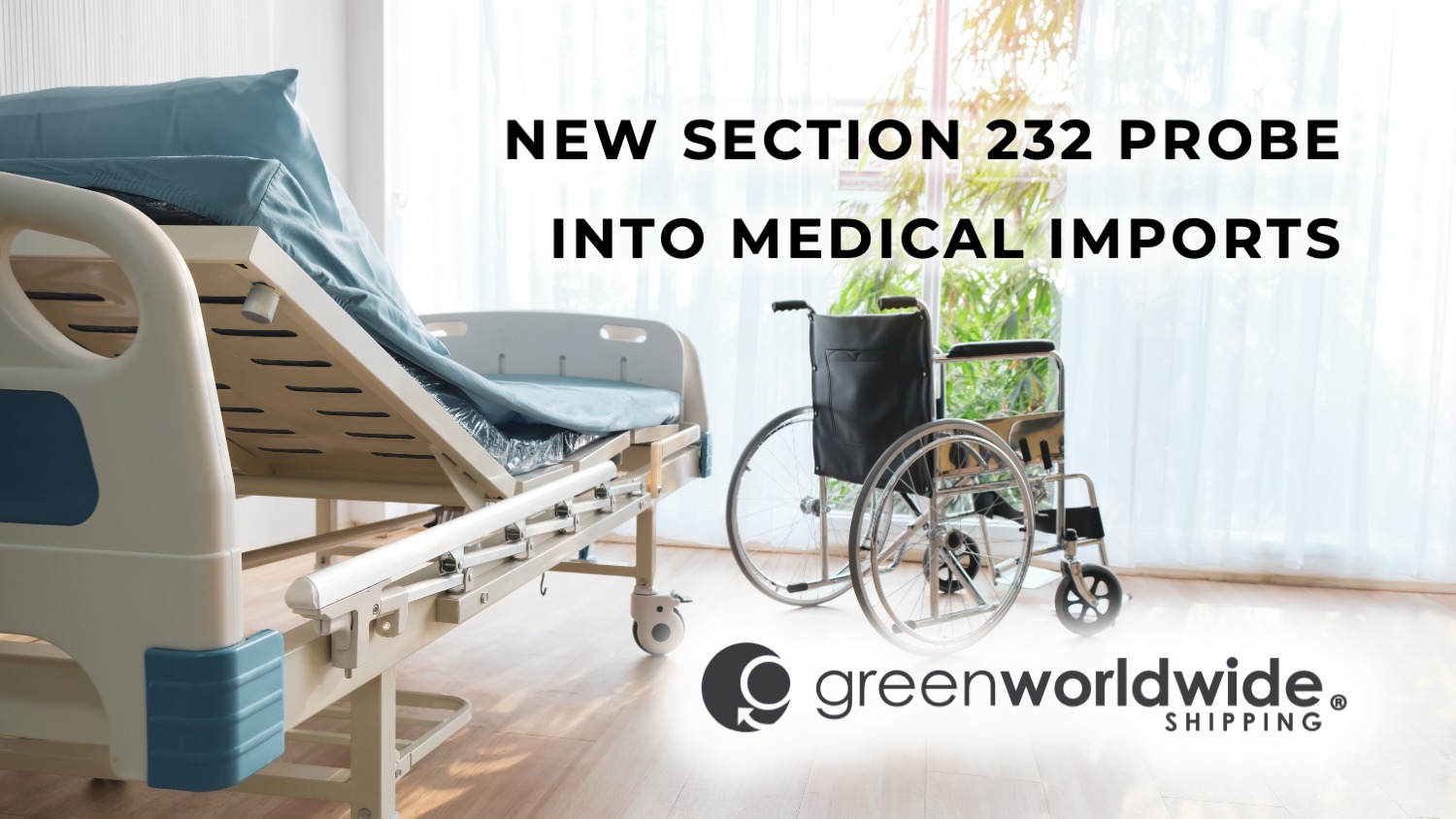
Medical equipment and devices such as wheelchairs, hospital beds, ventilators, pacemakers, insulin pumps, stents, prosthetics, orthopedic appliances, and high-end diagnostic machines like MRI and CT scanners.
These categories represent the types of products BIS will review to determine whether current levels of import reliance raise national security concerns.
WHAT IS BIS REVIEWING AS PART OF THIS INVESTIGATION?
BIS has indicated it will take a wide view of supply chain risks in its investigation.
Areas under review include:
-
Whether domestic manufacturers can meet current and future demand.
-
How concentrated U.S. imports are among a small group of foreign suppliers.
-
The role of subsidies, underpriced exports, or other trade practices that disadvantage U.S. production.
-
The potential impact of export restrictions or supply disruptions by foreign governments.
-
Options to expand U.S. production capacity and reduce reliance on imports.
The outcome will be a report to the White House with policy recommendations based on these findings.
HOW DOES THIS MATTER TO NATIONAL SECURITY?
The COVID-19 pandemic and other global disruptions revealed how quickly shortages of medical goods can create vulnerabilities. When critical supplies are concentrated in a few foreign markets, the risk of losing access during an emergency or a geopolitical dispute rises sharply. BIS is now tasked with determining whether these dependencies could impair the country’s healthcare and defense readiness.
WHAT SHOULD MEDICAL PRODUCT MANUFACTURERS AND IMPORTERS DO?
BIS has called for public input, and stakeholders have a limited window to provide feedback. Submissions may include data, analyses, or perspectives on demand forecasts, domestic capacity, foreign pricing practices, or risks tied to concentrated sourcing.
Importers and manufacturers should:
-
Track the Federal Register for updates on deadlines and procedures.
-
Review sourcing strategies and assess reliance on products that fall under this probe.
-
Consider whether bonded storage or duty-deferral programs could help cushion potential impacts.
-
Participate in the comment process to ensure industry perspectives are reflected in the record.
Comments must be submitted through the federal rulemaking portal at www.regulations.gov under docket ID BIS-2025-0258, referencing XRIN 0694-XC134.
The White House will base any potential trade actions on BIS’s final report, making industry participation an important part of the process.
Stay up-to-date on freight news with Green’s Weekly Freight Market Update by following us on LinkedIn. For continuous updates, make sure to check out our website at greenworldwide.com.