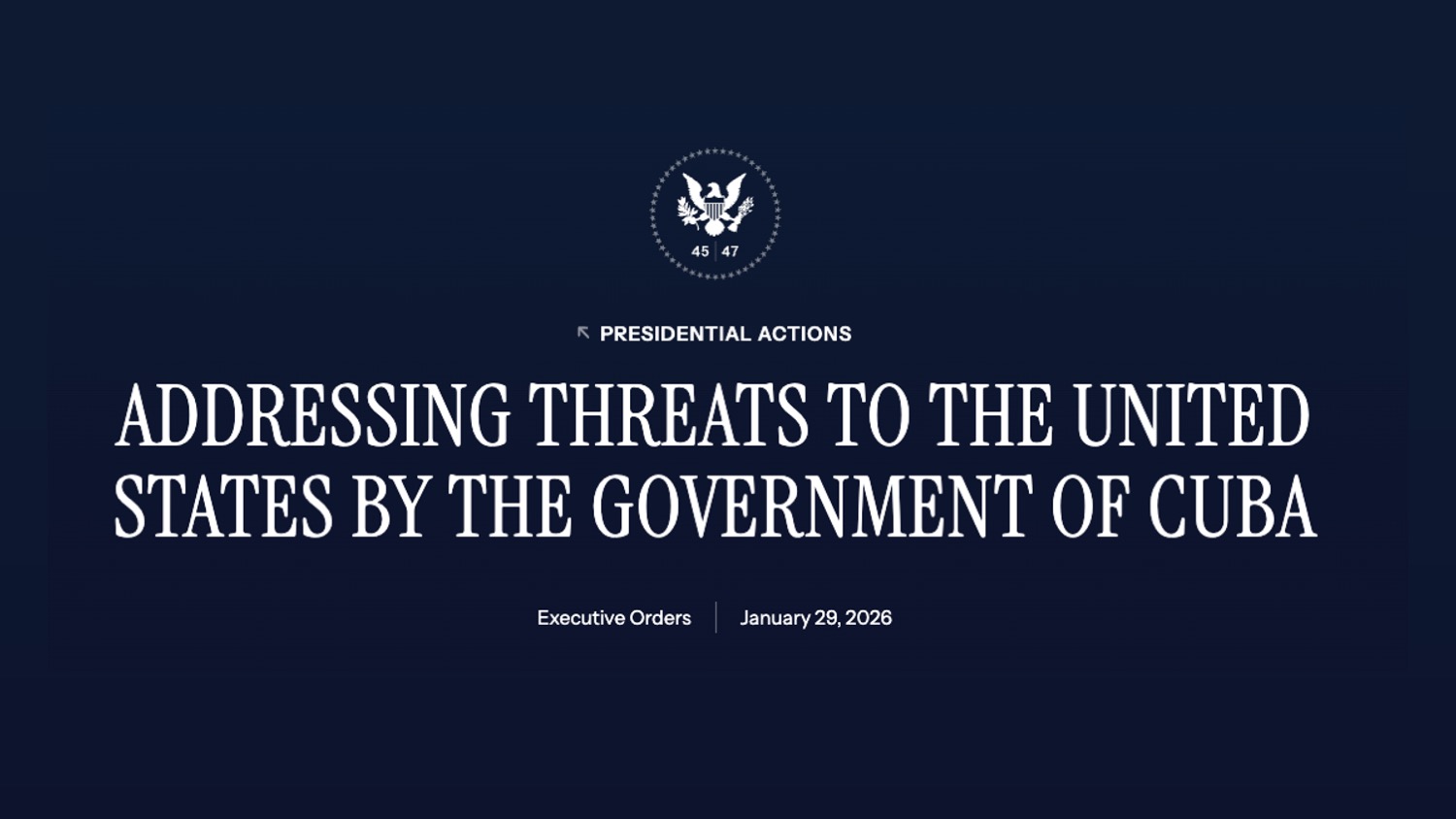
The White House recently issued a new Executive Order declaring a national emergency related to the Government of Cuba and establishing a framework that could permit additional tariffs on imports from countries that sell or otherwise provide oil to Cuba. Although no tariffs take effect automatically, the framework introduces a process that may affect a wide range of imported goods based on future interagency determinations.
READ THE EXECUTIVE ORDER HERE: ADDRESSING THREATS TO THE UNITED STATES BY THE GOVERNMENT OF CUBA
HOW WILL THE U.S. DETERMINE WHICH COUNTRIES SUPPLY OIL TO CUBA?
Responsibility for determining whether a foreign country directly or indirectly sells or otherwise provides oil to Cuba rests with the Secretary of Commerce. The order specifies that indirect provision may include transactions routed through intermediaries or third countries when there is knowledge that the oil may ultimately reach Cuba. When an affirmative determination is made, the Secretary of Commerce is required to notify the Secretary of State and continue monitoring the country’s activities on an ongoing basis.
After a determination by the Secretary of Commerce, the Secretary of State, in consultation with other agencies, evaluates whether additional tariffs should be applied to goods originating from the country in question and at what level. Any recommendation is submitted to the White House for review. Additional duties would be imposed only if that recommendation is approved. As a result, both the timing and scope of any tariff action depend on subsequent agency findings and decisions rather than the issuance of the order itself.
WHAT TYPES OF IMPORTED PRODUCTS COULD BE AFFECTED BY THESE TARIFFS?
The order does not identify specific commodities or sectors subject to potential tariffs. If implemented, additional duties could apply broadly to goods that are products of a country found to supply oil to Cuba, even when the imported merchandise is unrelated to energy production or petroleum products. This approach differs from traditional tariff actions that rely on defined product lists or Harmonized Tariff Schedule headings.
READ THE FACT SHEET HERE: PRESIDENT DONALD J. TRUMP ADDRESSES THREATS TO THE UNITED STATES BY THE GOVERNMENT OF CUBA
HOW DOES THE EXECUTIVE ORDER DEFINE OIL AND INDIRECT SUPPLY TO CUBA?
For purposes of the order, oil is defined to include crude oil and petroleum products. Indirect supply encompasses sales or transfers conducted through intermediaries or third countries when there is knowledge that the oil may ultimately be provided to Cuba. These determinations are made by the Secretary of Commerce based on available information and continued monitoring.
WHAT SHOULD U.S. IMPORTERS MONITOR AS THIS TARIFF FRAMEWORK DEVELOPS?
Importers should monitor determinations issued by the Department of Commerce and any related recommendations or actions announced by the Department of State. Because the framework is country-based rather than product-based, potential exposure may extend beyond traditional assessments tied to tariff classification or origin alone. Sourcing arrangements, routing decisions, and the use of intermediaries may become relevant as findings are issued under the order.
No changes to entry procedures, tariff classifications, or duty rates apply unless and until additional determinations are announced. Further guidance is expected through future agency actions or Federal Register notices as the framework is implemented.
Stay up-to-date on freight news with Green’s Weekly Freight Market Update by following us on LinkedIn. For continuous updates, make sure to check out our website at greenworldwide.com.