

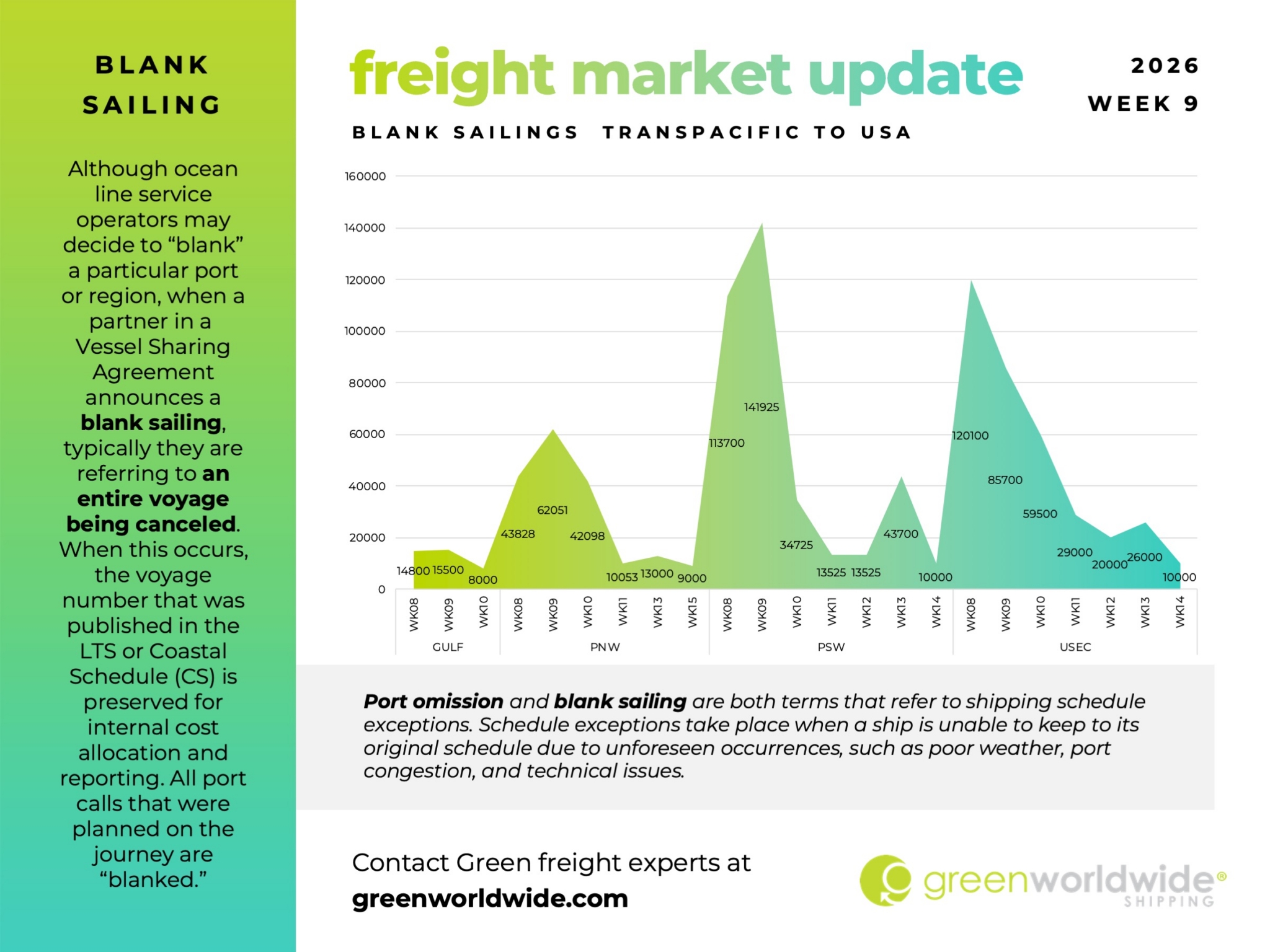
Late February finds the freight market adjusting to extended berth congestion across Asia-U.S. trade lanes alongside renewed tariff policy developments in Washington. North and South Asia origins are reporting longer vessel waiting times as networks normalize following Lunar New Year blank sailings. India-origin cargo is beginning to reflect moderate pressure tied to relay port dependencies. Air cargo markets remain stable with measured booking activity.
TRANS-PACIFIC OCEAN CAPACITY CONDITIONS
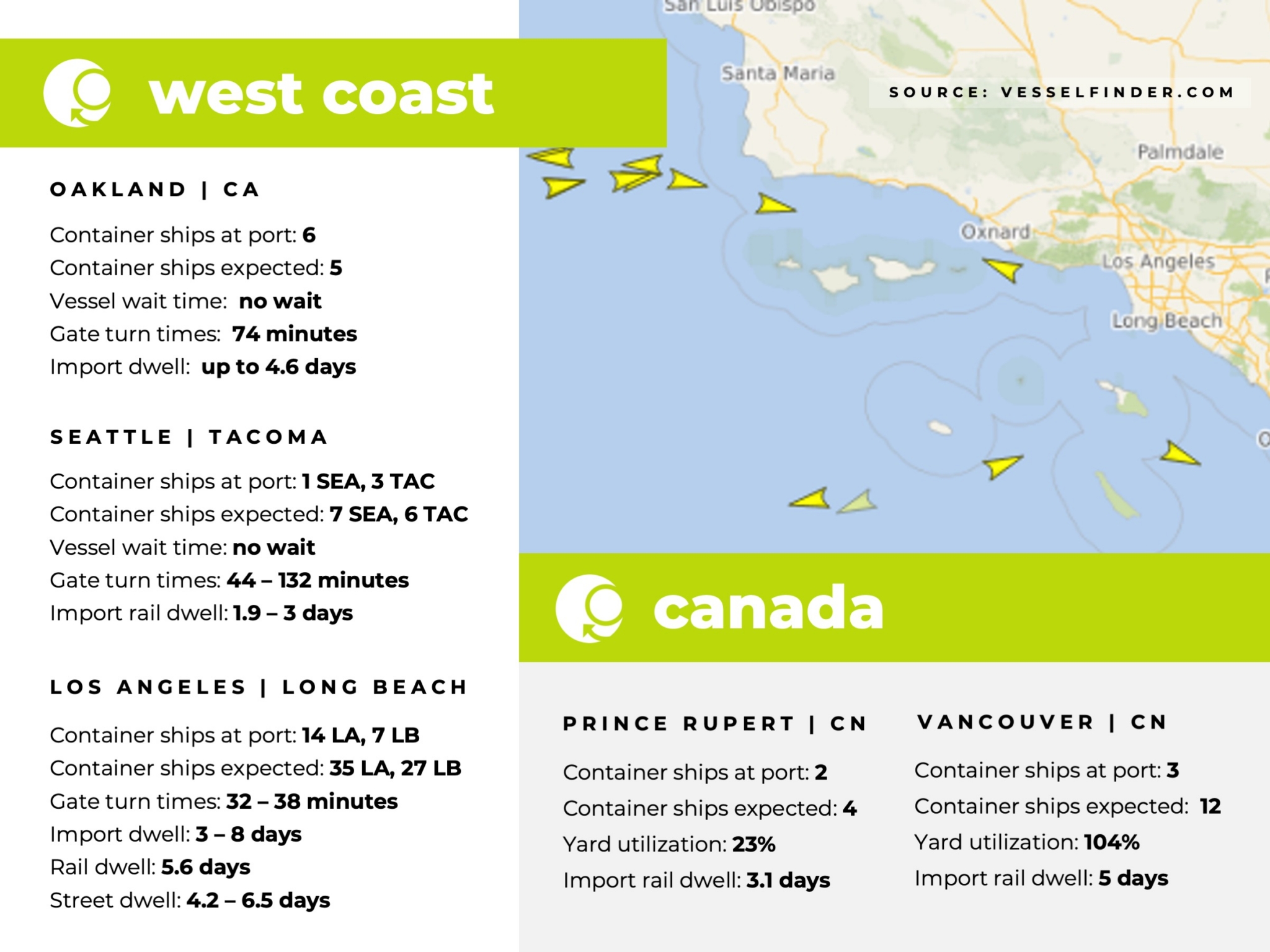
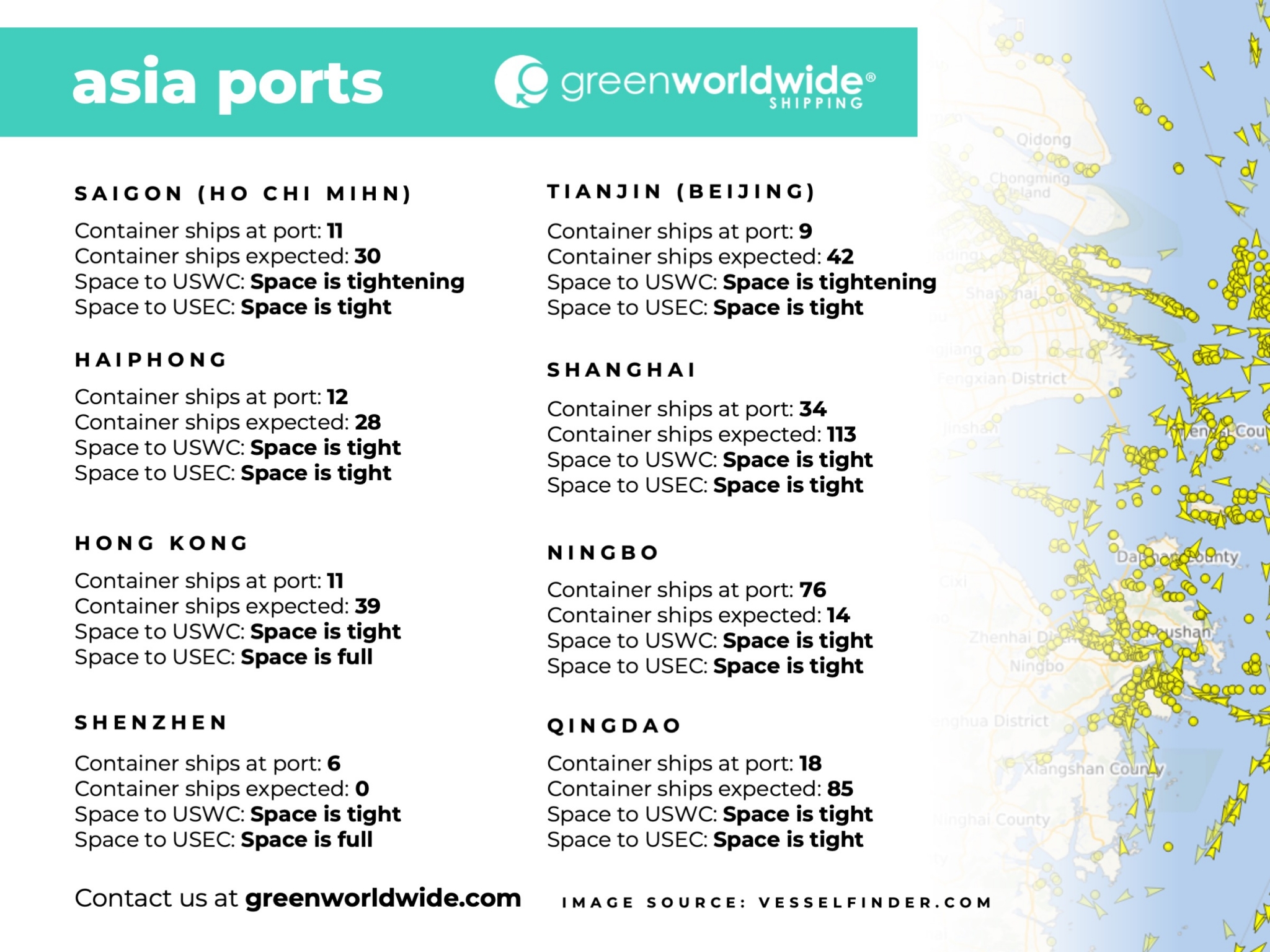
East China gateways including Shanghai, Ningbo, and Qingdao are reporting berth delays ranging from 48 to 72 hours, reducing effective weekly vessel availability into both U.S. coasts. South China conditions remain more variable, with Nansha experiencing elevated congestion and Shenzhen reflecting tighter execution into the U.S. East Coast. Capacity into the U.S. West Coast is tightening as rotation cycles stabilize. East Coast routings remain comparatively tighter due to longer sailing loops and schedule compression.
ASIA-ORIGIN PORT OPERATIONS & SPACE AVAILABILITY
Hong Kong and Shenzhen are operating under tight conditions, particularly on East Coast services. Shanghai and Ningbo remain constrained into both coasts as extended waiting times limit outbound flexibility. Qingdao continues tightening into the East Coast while remaining tight into the West Coast. Vietnam-origin cargo remains comparatively balanced but is beginning to show early signs of tightening as feeder alignment adjusts. Overall execution varies by port and service.
INDIA-ORIGIN CONGESTION
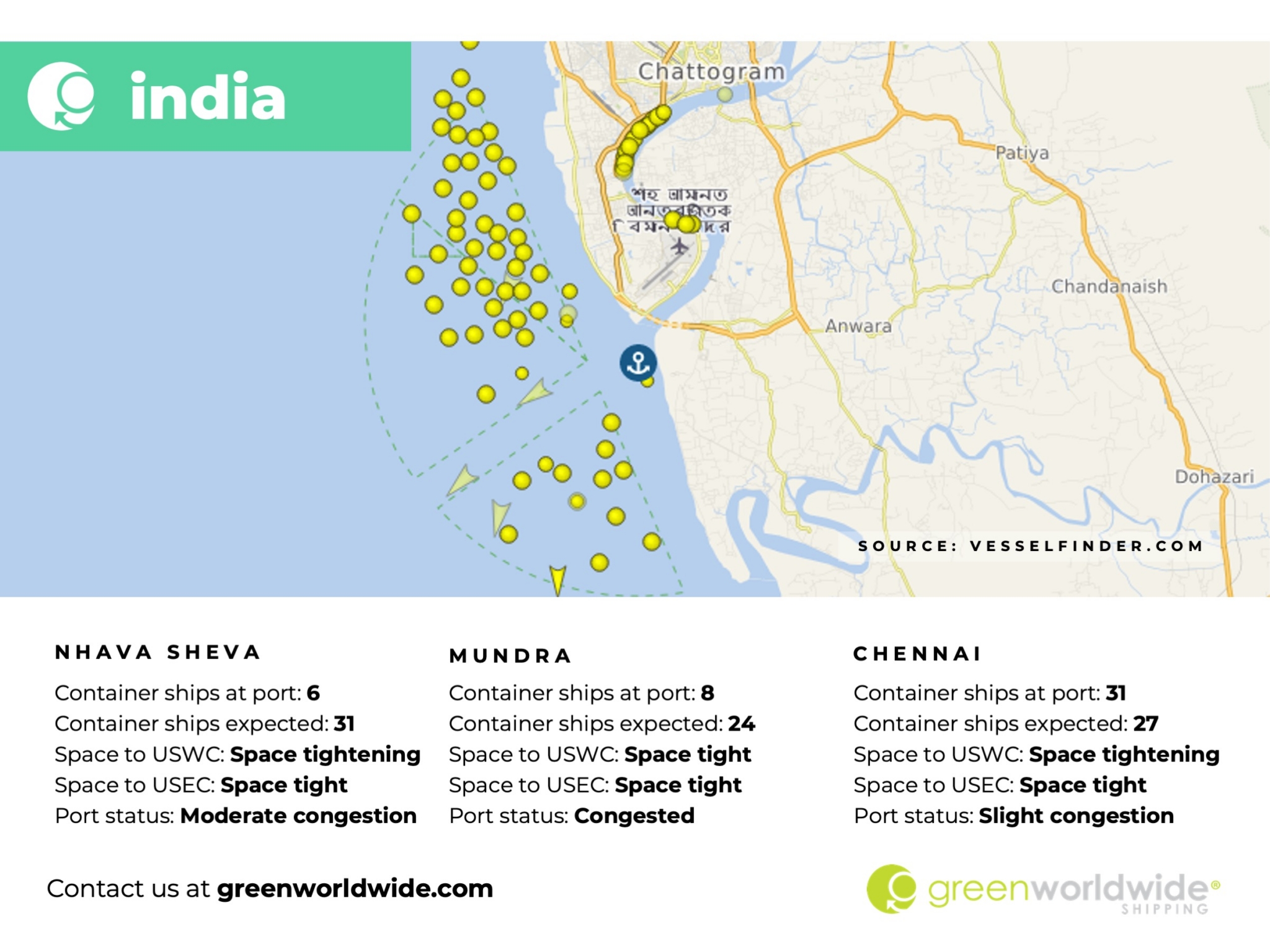
Nhava Sheva and Mundra are experiencing moderate congestion influenced by transshipment reliance through Middle East and Southeast Asia hubs. Chennai remains comparatively stable but exposed to downstream schedule variability. West Coast space is tightening, while East Coast space remains tight due to longer rotation cycles. Conditions remain service specific with execution tied closely to hub performance.
AIR CARGO STATUS
Asia-U.S. air cargo capacity remains stable entering the final week of February. Passenger belly capacity continues to normalize while freighter deployment remains aligned to current demand levels. Booking patterns reflect steady execution with no broad capacity contraction. Weather-related disruption in the U.S. Northeast contributed to localized delays but did not materially alter overall air network stability.
U.S. TRADE POLICY DEVELOPMENTS
A February 20, 2026, U.S. Supreme Court decision determined that IEEPA does not authorize tariff imposition, ending certain additional ad valorem duties previously implemented under that authority. In response, the White House imposed a temporary import surcharge under Section 122 of the Trade Act of 1974 effective February 24. The surcharge is temporary in duration and includes defined exclusions. Importers should continue monitoring Federal Register notices and CBP guidance for formal implementation updates.
 JOIN US TOMORROW FOR OUR LATEST WEBINAR: OUT WITH IEEPA THE SECTION 122 SWITCHEROO:
Tomorrow, February 26, 2026, Green Worldwide Shipping will host a focused briefing on the transition away from IEEPA-based duty collection and the implementation of a temporary import surcharge under Section 122, including what this means for entry strategy, exemptions, and compliance planning.
Presented by Kate Rayer, LCB, CCS, Vice President, Regulatory Services, this session will walk through the legal authorities that drive today’s tariff actions, the practical implications of Section 122 replacing IEEPA tariffs, and the “right now” decisions importers may need to make around timing, in-transit treatment, and origin-specific outcomes. This webinar is approved for 1 CCS/MCS, LCB credit with the NCBFAA Educational Institute (NEI).
CLICK TO REGISTER: https://greenworldwideshippingllc-645.my.webex.com/weblink/register/rf82edd5a971feadbbd6f5d3ea7aa8339
Stay up-to-date on freight news with Green’s Weekly Freight Market Update by following us on LinkedIn. For continuous updates, make sure to check out our website at greenworldwide.com.