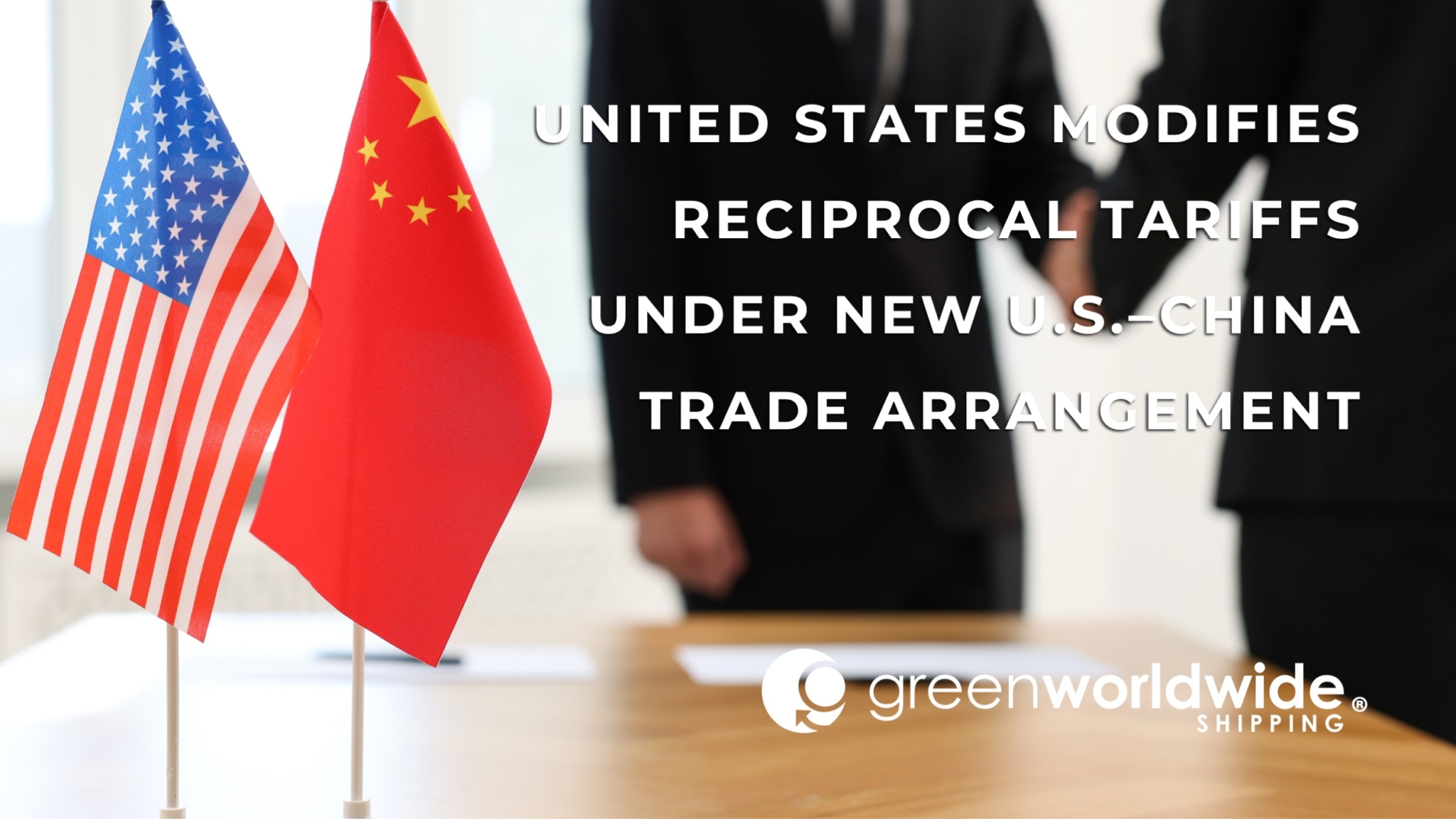
The United States (U.S.) has announced coordinated actions to modify its reciprocal tariff structure with the People’s Republic of China (PRC) and to adjust duties related to the synthetic opioid supply chain. These changes fulfill commitments made under the Kuala Lumpur Joint Arrangement following bilateral meetings in the Republic of Korea. Together, the orders extend tariff suspensions, align duty rates across related enforcement programs, and reinforce cooperation on trade, security, and enforcement priorities.
WHAT ARE THE KEY TARIFF CHANGES UNDER THE NEW ARRANGEMENT?
The United States will maintain a 10 percent additional duty on Chinese imports and extend the suspension of heightened reciprocal tariffs through November 10, 2026, under the Kuala Lumpur Joint Arrangement. In a coordinated but separate action, the United States will also reduce the additional ad valorem duty from 20 percent to 10 percent on products identified under the synthetic opioid supply chain framework, effective November 10, 2025. Together, the two executive orders align U.S. trade, security, and enforcement priorities across economic and public-health policy.
WHEN DO THESE TARIFFS TAKE EFFECT, AND WHICH PRODUCTS ARE COVERED?
The order directs that heading 9903.01.63 and associated notes within the Harmonized Tariff Schedule of the United States (HTSUS) remain suspended until November 10, 2026, maintaining the 10 percent ad valorem duty on covered Chinese imports. The suspension applies broadly to industrial, electronic, and manufactured goods affected by previous reciprocal tariff actions under Section 301.
- Effective period: Through November 10, 2026
- Tariff rate: 10 percent ad valorem duty
- Authority: Executive Order 14358 (Reciprocal Tariffs)
- Responsible agencies: USTR, Treasury, Commerce, Homeland Security
READ EXECUTIVE ORDER 14358 HERE: Modifying Reciprocal Tariff Rates to Reflect Discussions With the People’s Republic of China
HOW DO THE FENTANYL-RELATED DUTY REDUCTIONS COMPLEMENT THESE ACTIONS?
Issued concurrently, a second order modifies duties under the synthetic opioid supply chain framework established by Executive Order 14195. The United States will reduce the additional ad valorem rate of duty from 20 percent to 10 percent, effective November 10, 2025, reflecting China’s commitments to restrict precursor chemical exports and strengthen global controls.
- Affected products: Goods identified under heading 9903.01.24
- New rate: 10 percent ad valorem duty
- Effective date: November 10, 2025
- Authority: Executive Order 14359 (Synthetic Opioid Supply Chain)
- Enforcement lead: Department of Homeland Security
The coordinated reduction aligns Section 301 trade actions with national security and public health measures, creating a unified tariff baseline across both economic and enforcement frameworks.
READ EXECUTIVE ORDER 14359 HERE: Modifying Duties Addressing the Synthetic Opioid Supply Chain in the People’s Republic of China
HOW WILL U.S. AGENCIES ENFORCE THE NEW TARIFF ORDERS?
Federal agencies will continue to evaluate China’s implementation of commitments related to:
- Removal of export controls on rare earth elements and critical minerals
- Expansion of agricultural imports from the United States
- Market access for semiconductor and advanced manufacturing sectors
- Enforcement of fentanyl-related chemical export restrictions
The U.S. Trade Representative, Treasury, Commerce, and Homeland Security departments will monitor both tariff programs and may recommend reactivation of higher reciprocal or Section 301 rates if compliance lapses occur. Importers should verify entries under headings 9903.01.63 and 9903.01.24 to ensure accurate duty treatment.
Stay up-to-date on freight news with Green’s Weekly Freight Market Update by following us on LinkedIn. For continuous updates, make sure to check out our website at greenworldwide.com.