
Winter Storm Fern is driving widespread snow, sleet, and significant ice accumulation across the Southern Plains, Mid-South, Southeast, Mid-Atlantic, and portions of the Northeast impacting critical freight corridors from South Texas through the Carolinas and northward.
As Fern progresses eastward, hazardous travel conditions, prolonged freezing temperatures, and power disruptions are affecting surface transportation networks, air cargo operations, and marine terminal activity. Several ports and inland facilities have suspended or limited operations, while air cargo hubs across the eastern United States continue to experience weather-related delays and capacity constraints.
WHICH PORTS AND TERMINALS ARE AFFECTED BY WINTER STORM FERN?
The extreme winter weather and associated safety conditions prompted temporary closures and operational restrictions at several U.S. ports and inland terminals, particularly along the Southeast and Mid-Atlantic.
Port authorities issued advisories indicating closures or limited access for vessel movements, gate operations, and rail service at select facilities.
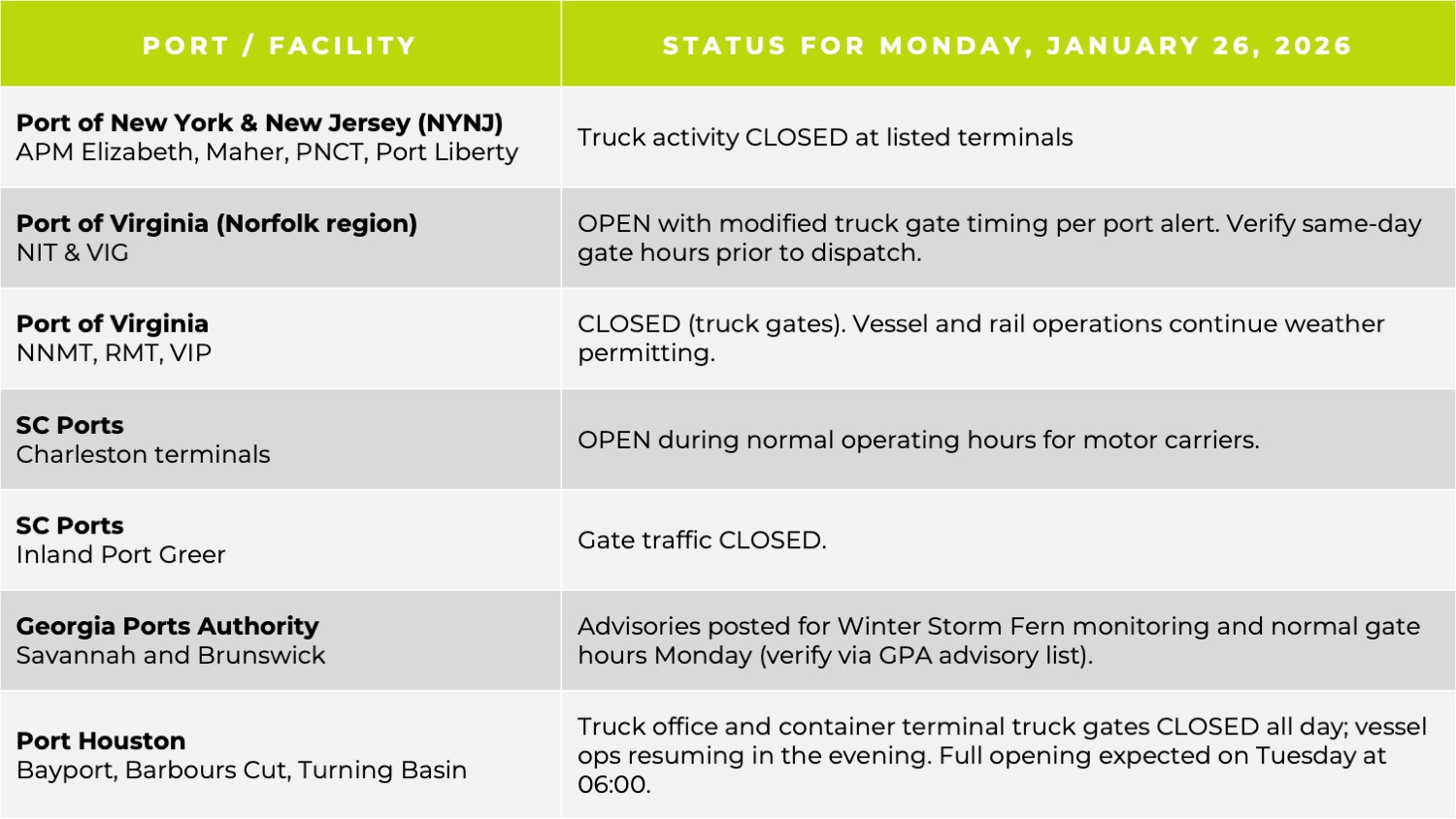
Ports reporting operational impacts include:
In contrast, ports farther south, including Miami, remain open and operational as of Monday, with no port authority or Coast Guard restrictions currently in place. For a detailed, facility-level view of port, gate, and rail status, refer to the operational status table below.
WHICH SURFACE FREIGHT CORRIDORS ARE IMPACTED BY FERN?
Fern’s winter weather is directly impacting highway mobility across several of the most heavily utilized freight corridors in the United States. National Weather Service ice outlooks show elevated risk along east-west and north-south routes connecting Texas, the Mid-South, and the Southeast.
Key interstate corridors experiencing reduced operating conditions include:
-
I-35 and I-10 across Texas
-
I-40 through Texas, Arkansas, Tennessee, and North Carolina
-
I-55 and Mississippi River Valley connectors near Memphis
-
I-75 and I-85 across Georgia and the Southeast
-
I-95 feeder corridors in the Mid-Atlantic and Northeast
Icing, refreeze conditions, and localized closures are extending transit times and complicating driver scheduling. Even as precipitation tapers in some regions, sustained below-freezing temperatures may delay full corridor recovery.
HOW IS THE STORM AFFECTING AIR CARGO OPERATIONS?
Thousands of flights have been canceled or delayed since Winter Storm Fern began impacting U.S. transportation networks over the weekend. Federal aviation authorities confirmed Monday that weather conditions continue to limit how many aircraft can safely depart, arrive, and move between major U.S. airports, particularly across Texas, the Southeast, Mid-Atlantic, and Northeast.
These constraints are reducing available air cargo capacity and slowing recovery timelines as aircraft and crews are repositioned. For shippers relying on air freight, delays may persist even after weather conditions improve as airport operations and flight schedules normalize.
IS CLASS I RAIL SERVICE IMPACTED BY FERN?
Class I railroads operating across the Southern Plains, Mid-South, and Eastern United States have activated winter operating plans as Winter Storm Fern brings snow, ice, and prolonged cold to large portions of their networks. BNSF and CSX have positioned crews and equipment to support safe operations, while advising customers to expect weather-related delays, extended transit times, and potential routing adjustments as conditions evolve.
Stay up-to-date on freight news with Green’s Weekly Freight Market Update by following us on LinkedIn. For continuous updates, make sure to check out our website at greenworldwide.com.