
Transpacific ocean networks are starting to feel the effects of tightening fuel availability across key bunkering hubs. Industry experts note that rising fuel costs are influencing how carriers are managing vessel deployment, particularly on eastbound lanes. Operations remain steady overall, but adjustments like slower sailing speeds and revised fueling strategies are becoming more visible. These shifts are beginning to impact transit consistency and equipment flow across Asia origins.
ROUTING CHANGES ADD COMPLEXITY THROUGH THE MIDDLE EAST
Restricted vessel movement through the Strait of Hormuz is adding pressure to global routing decisions. Carriers are adjusting rotations to avoid high-risk areas, which is extending transit times and reducing schedule reliability. Fuel supply remains manageable for now, but early signs of tightening are emerging across Asia. If disruptions continue, this region will remain a key pressure point for both fuel access and network stability.
ASIA ORIGINS HOLD STEADY AS EQUIPMENT CYCLES SLOW
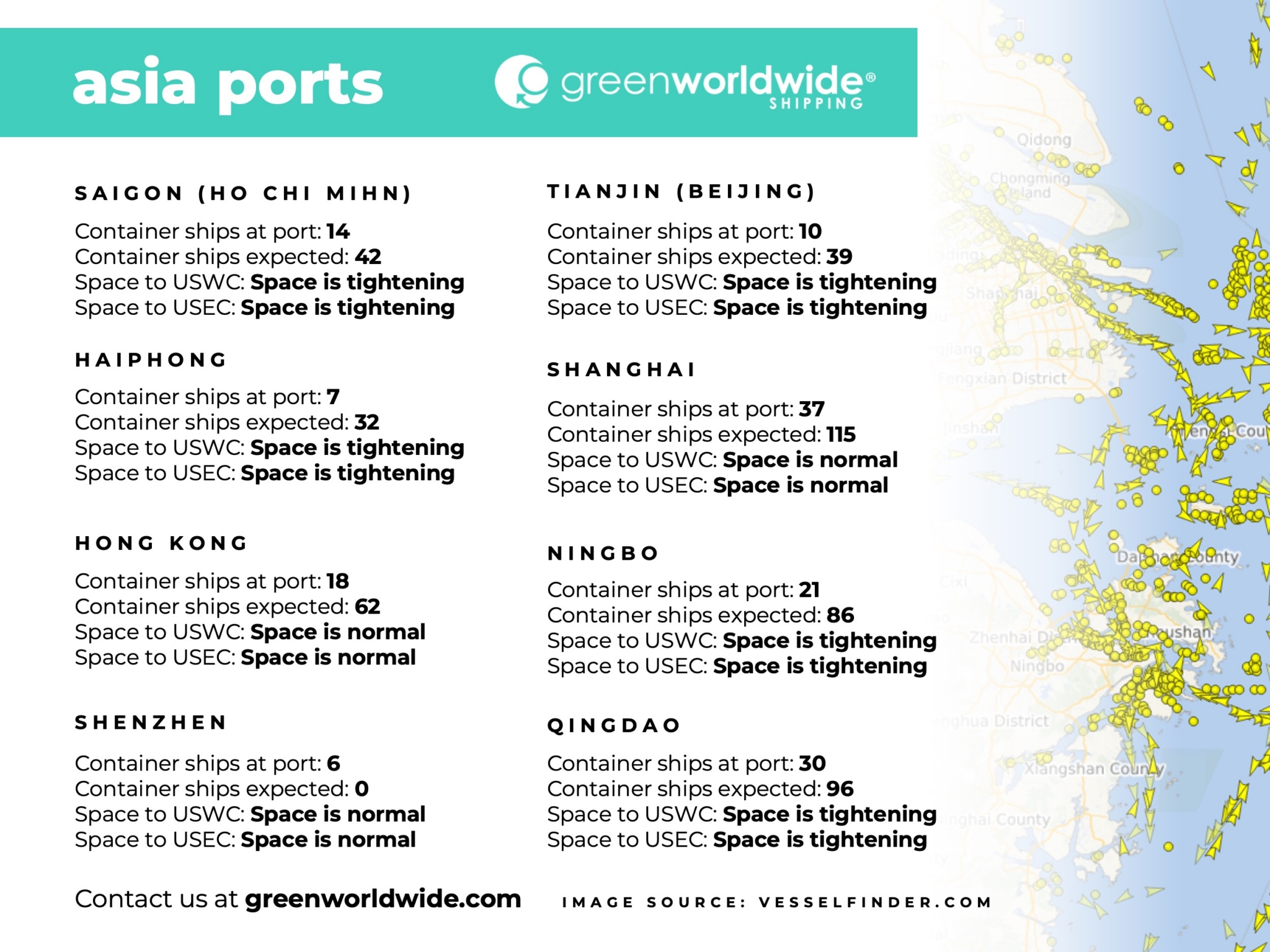
Capacity across major Far East origins remains generally stable, though early signs of tightening are developing. Delays tied to vessel rerouting are slowing equipment repositioning, with containers sitting longer in transit and at transshipment hubs. Most primary gateways are still operating without major disruption. However, continued delays could begin to limit available space if equipment cycles do not recover.
INDIA TO U.S. LANE SHOWS EARLY SIGNS OF CONSTRAINT
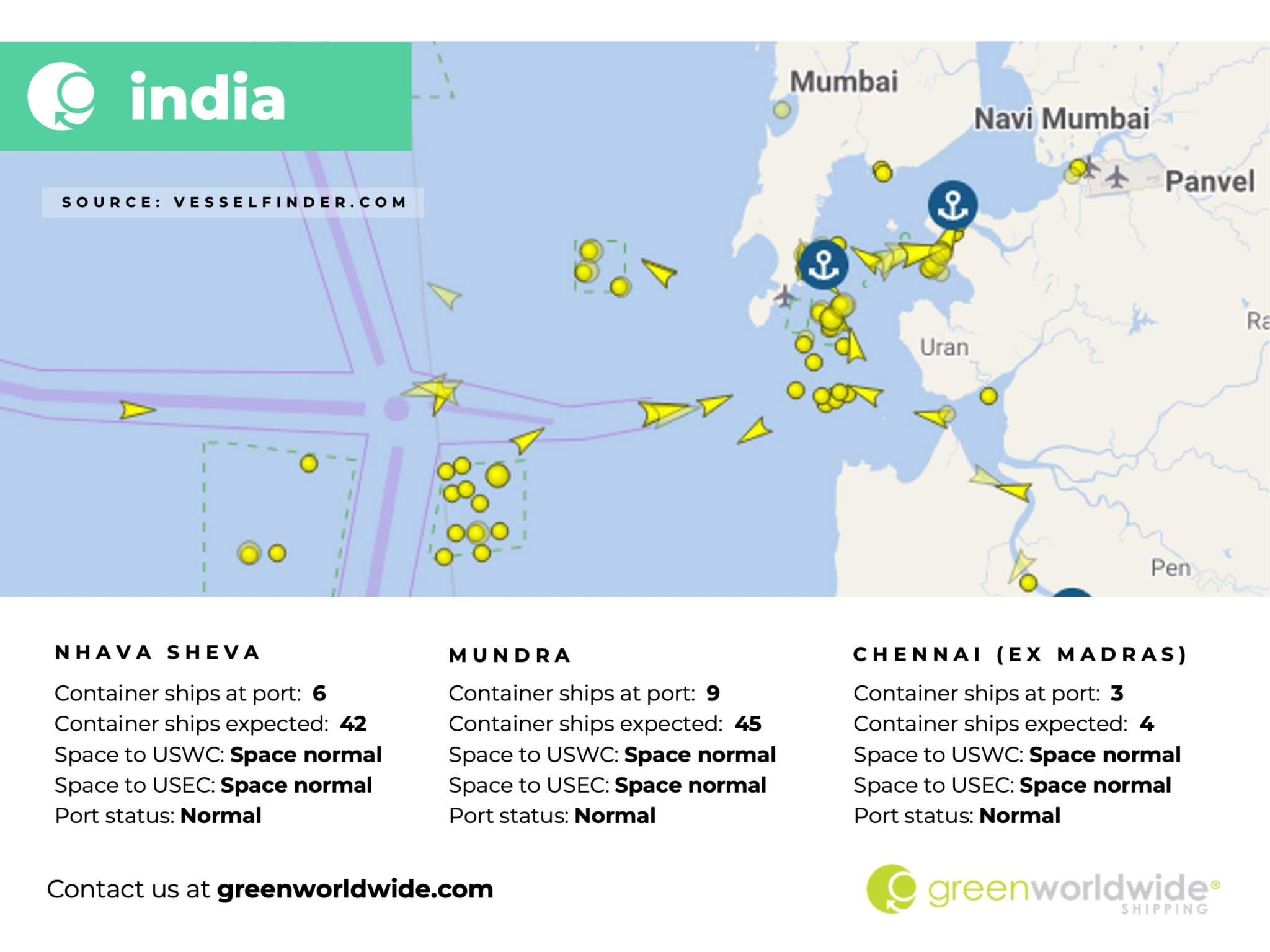
India-origin shipments are beginning to show more pressure as extended transit times impact vessel scheduling. Space remains available in the near term, but forward bookings are becoming more important, especially into the U.S. East Coast. Equipment levels are still adequate at major ports, though early imbalance trends are forming. Kolkata continues to experience congestion, contributing to longer dwell times.
AIR CARGO CAPACITY RESPONDS TO FUEL COSTS AND DEMAND SHIFTS
Air cargo networks across Asia are adjusting as fuel costs rise and demand remains elevated across key export sectors. Capacity is still active on transpacific lanes, supported by electronics, e-commerce, and high-value shipments, but fuel-related adjustments are becoming more pronounced. Surcharge increases are being implemented across multiple regions, while select service suspensions into the Middle East are tightening available lift on certain routes. Southeast Asia continues to see strong outbound volume, adding pressure to available capacity. At the same time, ongoing fleet additions and network expansion into North America are helping maintain baseline capacity, even as carriers adapt to shifting cost structures and routing constraints.
TRADE POLICY DEVELOPMENTS FOCUS ON IEEPA REFUNDS AND SECTION 232 CONTENT CLARITY
Recent U.S. trade policy activity focused on two areas that continue to evolve through agency guidance and court action. The U.S. Court of International Trade expanded the scope of entries eligible for IEEPA tariff refunds while maintaining the suspension of execution, reinforcing that implementation remains tied to CBP’s CAPE system development within ACE. At the same time, CBP issued informal guidance clarifying how metal content should be calculated under Section 232, confirming that copper and iron follow the same valuation framework used for steel and aluminum.
Stay up-to-date on freight news with Green’s Weekly Freight Market Update by following us on LinkedIn. For continuous updates, make sure to check out our website at greenworldwide.com.