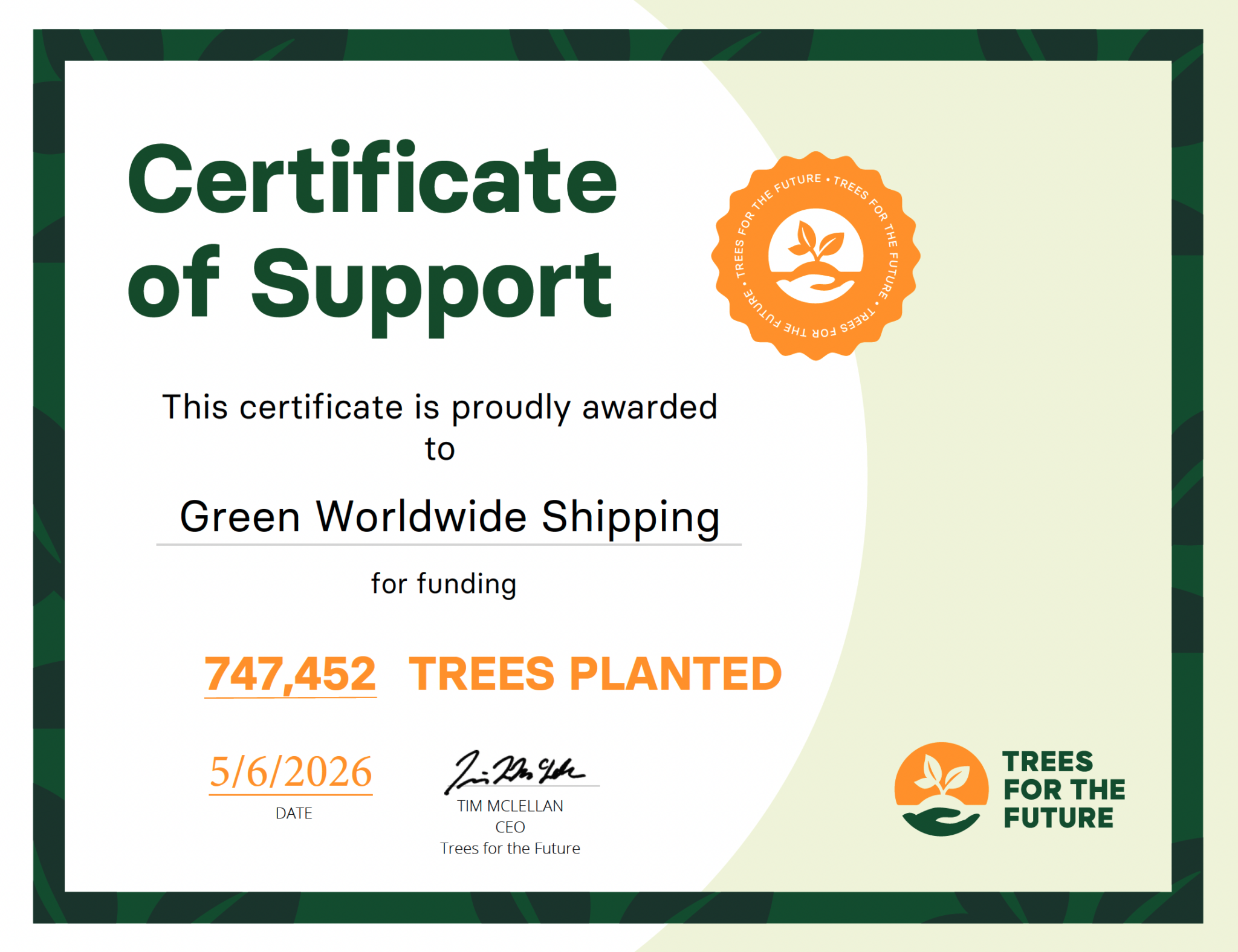
Green Worldwide Shipping® (Green) donated 23,000 trees in the first quarter of 2026 through its Green Trees program with Trees for the Future (TREES). Since the program began in 2019, Green has helped fund the planting of 747,452 trees worldwide, supporting TREES’ ongoing work to restore degraded land and strengthen farming communities across sub-Saharan Africa.
WHAT IS TREES FOCUSING ON IN 2026?
TREES enterd 2026 with a sharpened geographic focus. After years of programming across West and East Africa, the organization completed a strategic transition at the close of 2025, concentrating its Forest Garden Approach work in Kenya, Tanzania, and Uganda. Locally led field teams in each country tailor the program to conditions on the ground, from water access and land availability to market dynamics and community structure. The 2025 TREES Impact Report notes that the Forest Garden Approach is active across 26 different agroecological zones, reflecting the range of environments where the model is applied. Green’s Q1 2026 donations support this work as it moves into its next chapter.
HOW DOES THE FOREST GARDEN APPROACH PRODUCE RESULTS OVER TIME?
During the 2024 to 2025 planting year, TREES enrolled 4,056 new Forest Garden farmers, bringing total Forest Gardens in development to 35,143 across Kenya, Tanzania, and Uganda. Participating farming families reported an 83% increase in food security. Participant satisfaction across all four years of the program held above 96%.
The land itself reflects parallel gains. With 24,212 hectares currently under active restoration, the Forest Garden Approach is rebuilding soil structure, improving water retention, and slowing erosion across farmland that was previously degraded. As root systems deepen and organic matter accumulates season over season, the restored land becomes a long-term carbon sink. TREES is formalizing that impact through independent verification at its Lake Victoria Watershed Agroforestry Carbon Project, with the Kenya phase alone projected to generate 4.5 million verified carbon units across 16,000 hectares.
These figures reflect outcomes measured at the farm level, within communities where the program has been active long enough to show durable change.
“I have come to realize that all along I have been wasting my land until the Forest Garden program arrived.”Adito | Forest Garden Participant | Trees for the Future
WHAT DOES RESTORATION LOOK LIKE ON A SINGLE FARM?
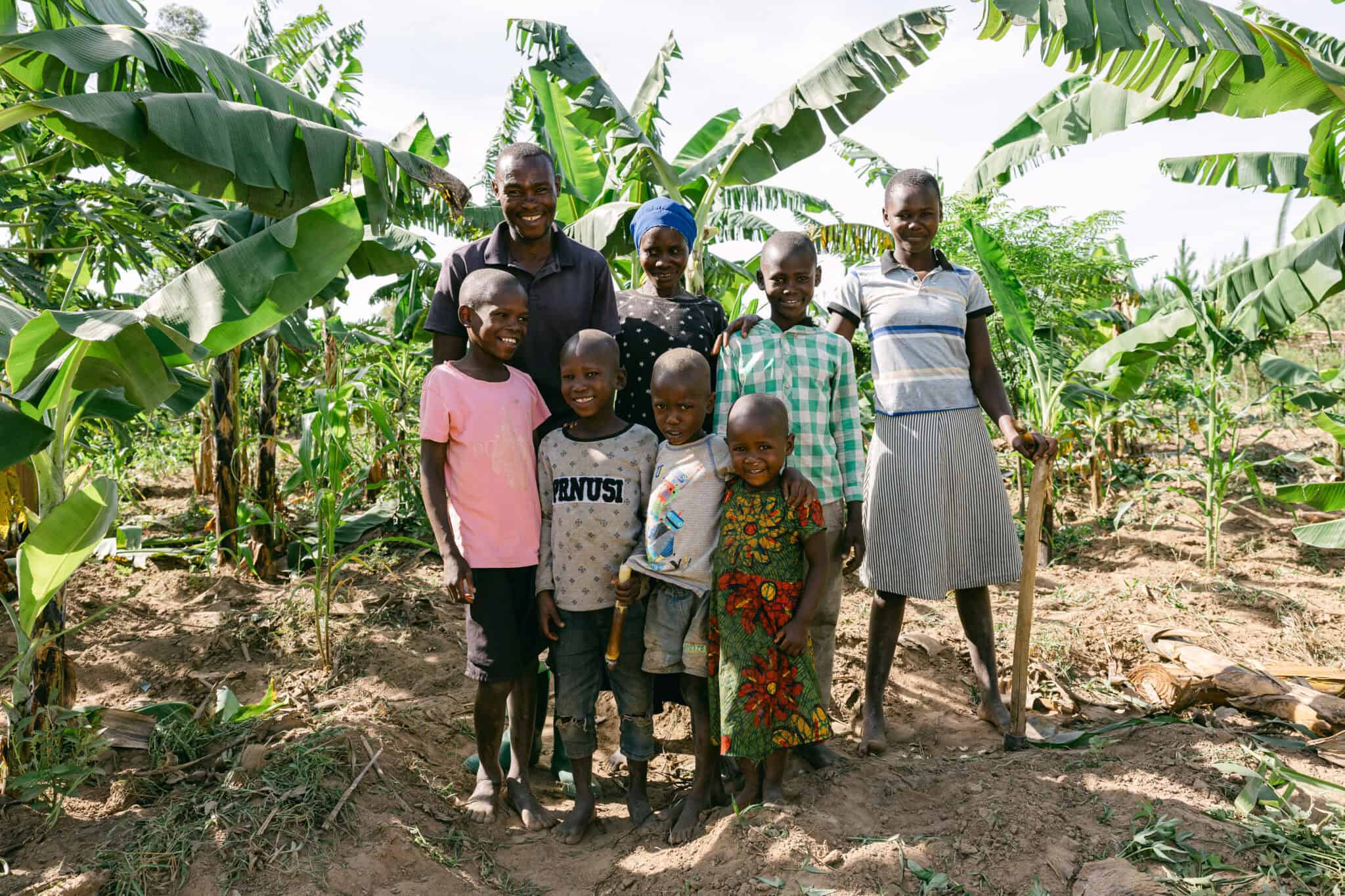
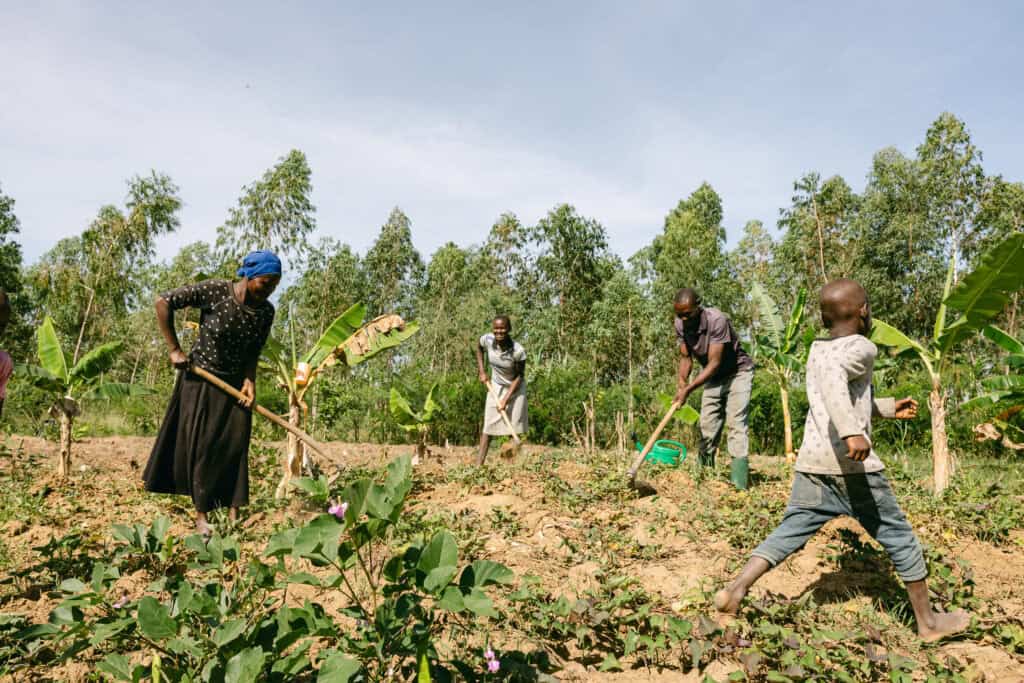
Adito and his wife Mary farm in eastern Uganda, where they are raising seven children, including three orphans they have taken in. Before joining the TREES program in 2022, their land produced at most three crops.
Today, their farm supports more than 20 different crops, providing consistent food for the household and surplus for sale at local markets. The income has allowed the family to pay school fees, purchase livestock, and expand into passion fruit cultivation, a crop expected to generate steady weekly income.
Their story is one of 63,767 active partner farmer households currently working within the TREES program.
TREES FOR THE FUTURE
TREES is a well-respected 501(C)(3) non-profit that focuses on planting trees for poverty alleviation, hunger eradication, and environmental healing. Since 1989, TREES has planted over 420 million trees and restored more than 40,219 hectares of degraded land, partnering with more than 63,767 farming families across sub-Saharan Africa.
MAKE YOUR FREIGHT MATTER
When you choose Green Worldwide Shipping, you’re not just selecting a logistics partner – you’re also contributing to meaningful change. For every shipment, Green plants a tree, helping to support both farmers and the planet. Contact Green to learn how you can make an impact!
To learn more about Green’s sustainability efforts, visit https://www.greenworldwide.com/sustainability/.