

Global freight conditions remain active heading into the second half of July. U.S. import volumes remained strong in June, container rates continue to trend above year ago levels, and carriers continue managing capacity across ocean and air services. Several new tariff actions and customs reporting requirements announced this week also reinforce the importance of planning ahead and maintaining close communication with logistics partners.
MARKET SUMMARY OVERVIEW
Container rates on Asia–U.S. trade lanes remain elevated through early July as carriers continue implementing general rate increases and peak season surcharges. Strong import demand and continued front loading ahead of tariff implementation and customs deadlines is supporting higher cargo volumes across key trade lanes.
Recent U.S. tariff announcements are also influencing importer purchasing decisions as many companies evaluate sourcing strategies and shipment timing ahead of upcoming implementation dates. While conditions have begun improving in some regions, capacity and equipment availability continue to vary by origin, making early planning an important part of maintaining supply chain reliability.
U.S. IMPORT VOLUMES REMAIN STRONG
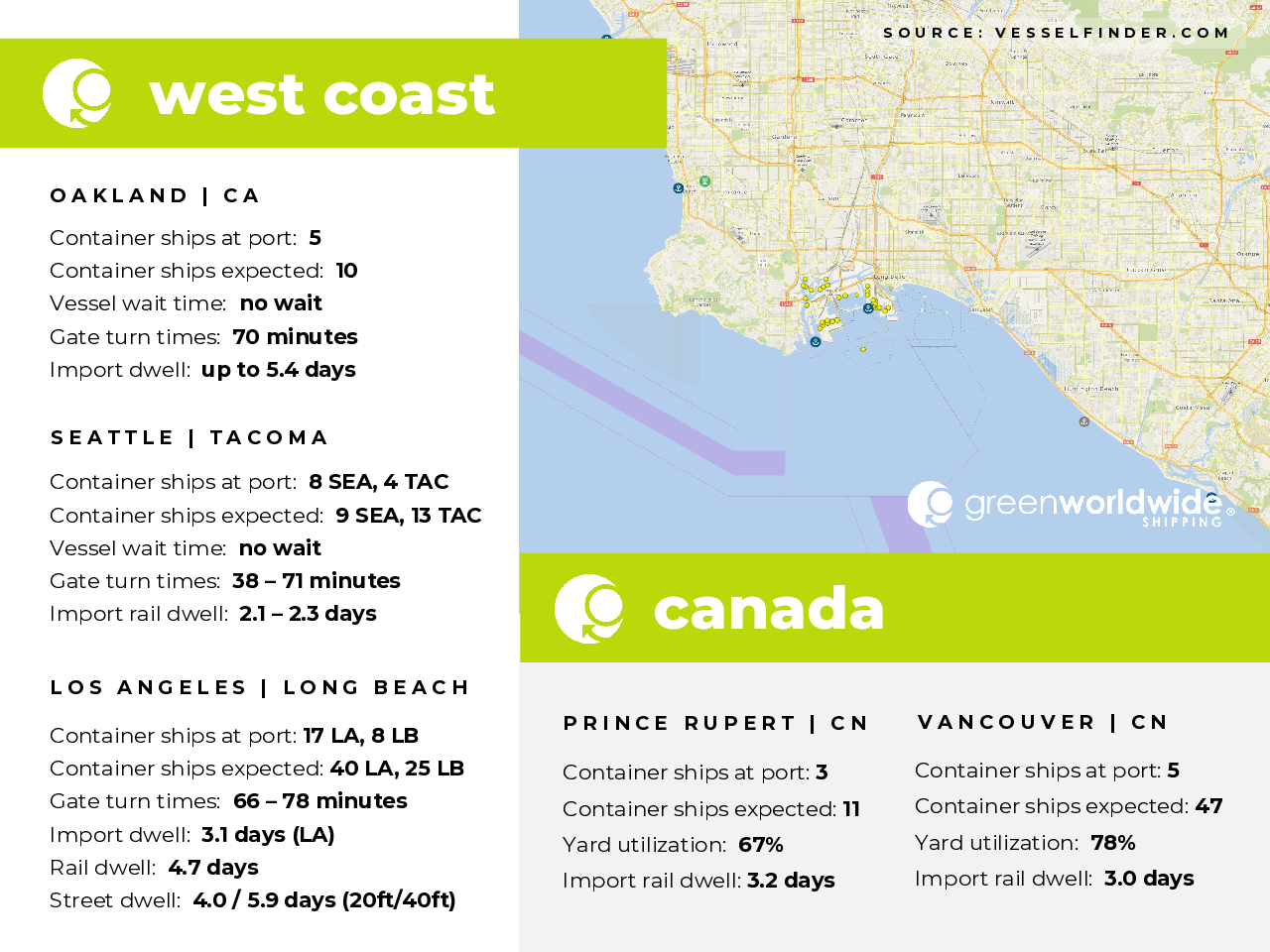
The Port of Los Angeles processed 1,002,734 TEUs in June, surpassing one million TEUs for the month. Loaded imports increased 13% year over year, reflecting continued demand across Trans-Pacific services.
Strong cargo volumes are expected to continue through July as many importers position inventory ahead of potential tariff changes and the traditional peak shipping season. Shippers should continue planning bookings early as elevated import volumes move through inland transportation networks.
TRANS-PACIFIC RATES REMAIN ELEVATED
Drewry’s World Container Index remained near $4,600 per 40-foot container during the week of July 9, reaching its highest level since September 2024.
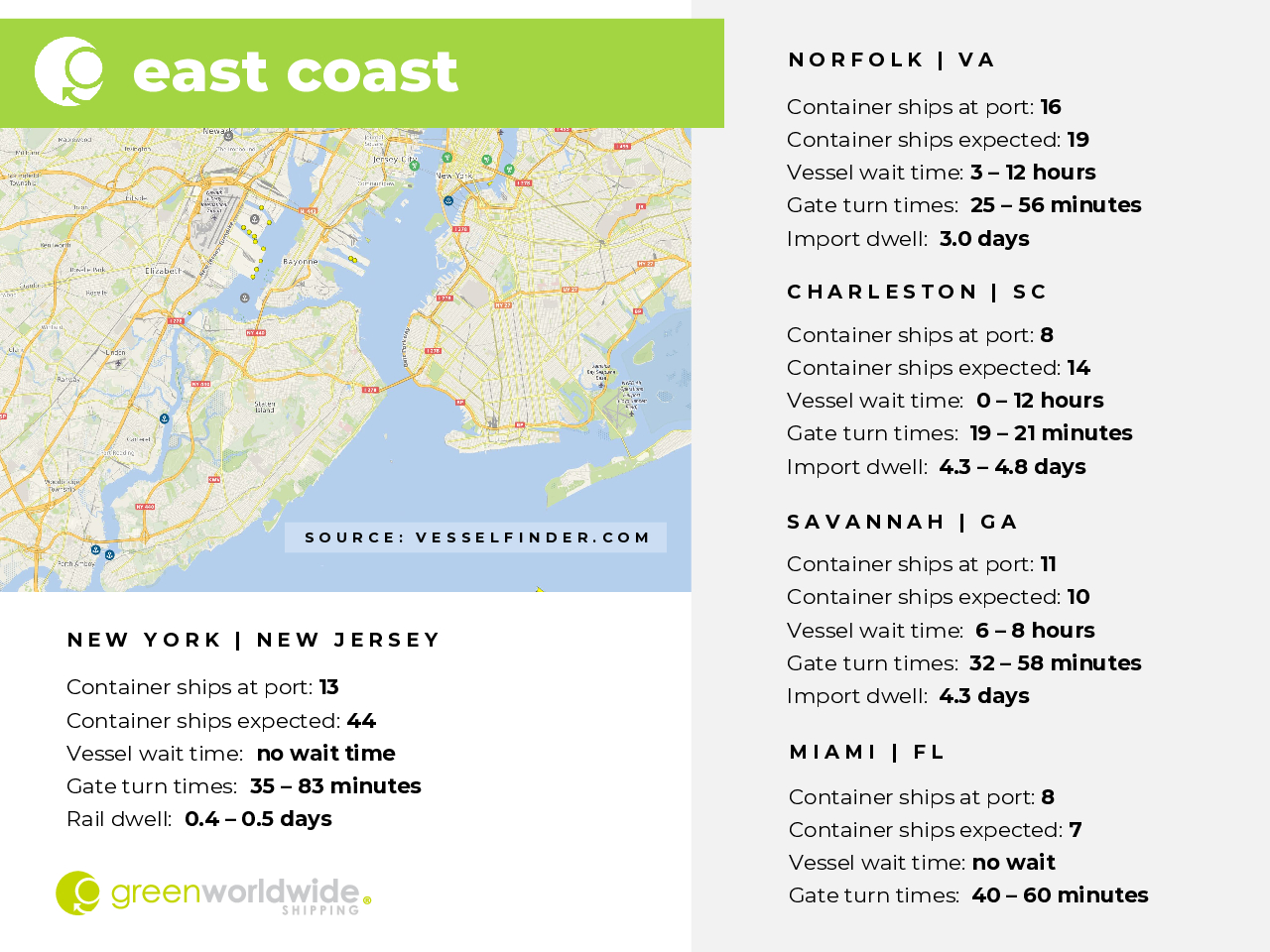
Ocean carriers continue managing capacity through rate adjustments and network changes while balancing equipment availability across major trade lanes. East Coast services are expected to remain tighter than West Coast routings as carriers continue adjusting vessel deployments.
Importers should continue monitoring booking availability as they finalize August shipping plans.
INDIA–U.S. SERVICES REMAIN TIGHT
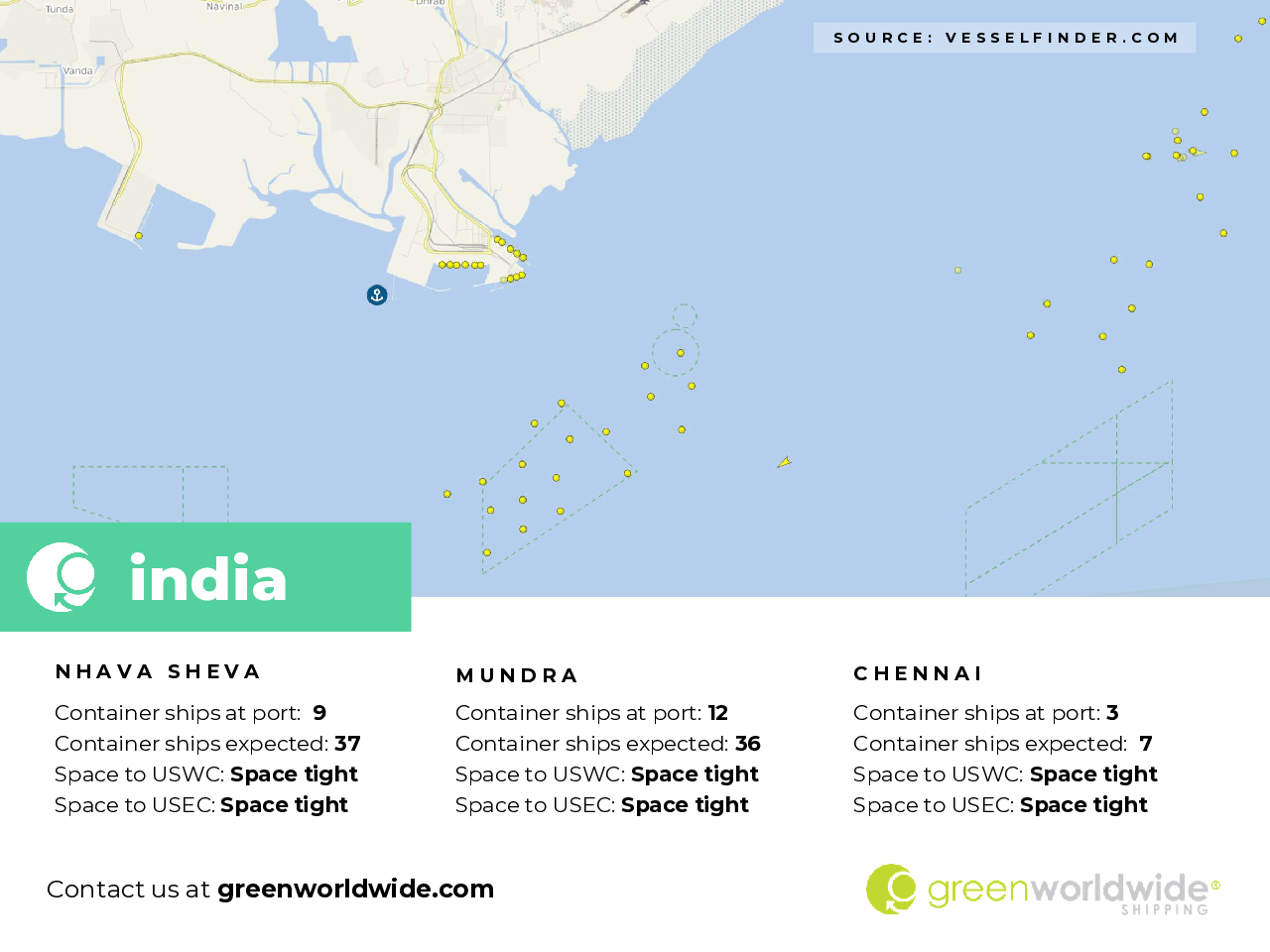
Capacity from India to the U.S. remains limited as carriers continue prioritizing higher demand Asia services. Reduced vessel space and recently implemented overweight container surcharges continue influencing pricing and equipment availability on selected shipments.
Importers shipping from the Indian Subcontinent should confirm space availability well in advance and allow additional flexibility when planning transit schedules.
SELECT SERVICES RETURN TO THE SUEZ CANAL
Maersk has resumed Trans-Suez routing on select services connecting the Middle East and India with the U.S. East Coast. While transit times may improve on affected services, the return remains gradual and dependent on regional conditions.
Shippers utilizing Middle East, Indian Subcontinent, and U.S. East Coast services should continue confirming routing details and transit expectations when booking cargo.
SOUTHEAST ASIA CONDITIONS REMAIN MIXED
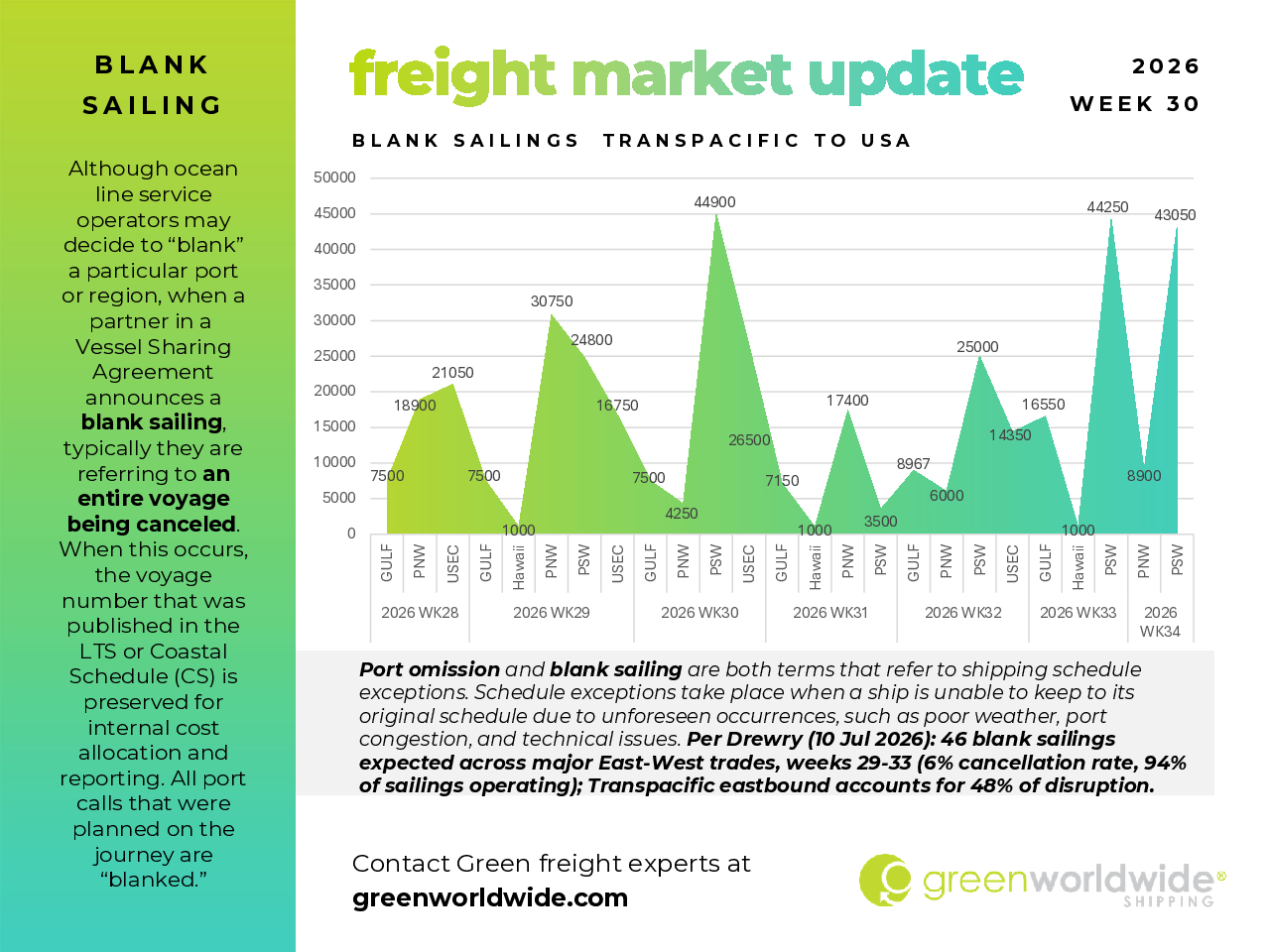
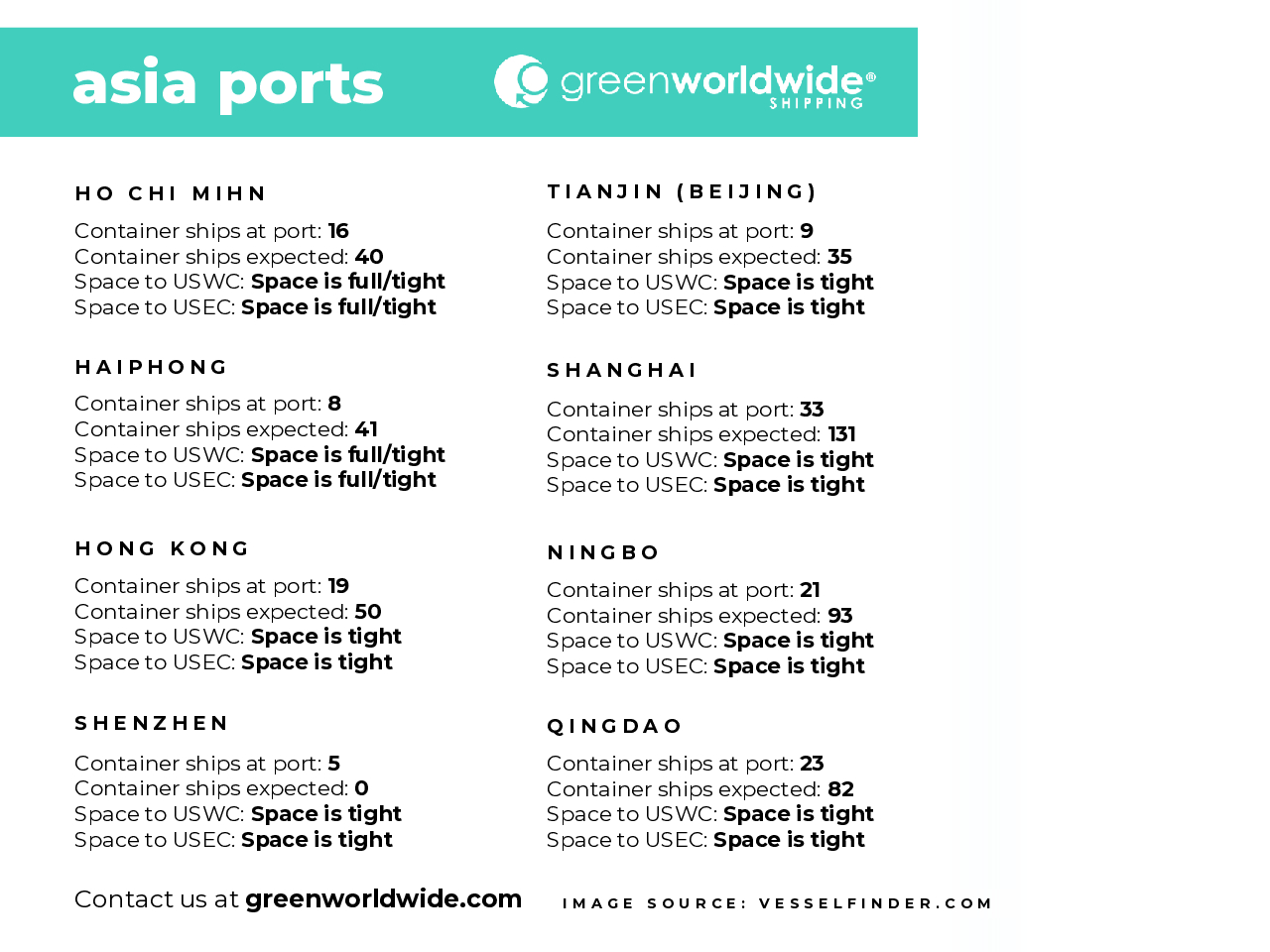
Intra-Asia freight rates have eased in recent weeks, although equipment availability remains inconsistent across several Southeast Asian origins. Blank sailings and congestion at major transshipment hubs continue affecting scheduling on some U.S.-bound shipments.
While regional conditions have improved in some markets, importers should continue planning ahead for shipments requiring specific sailing schedules or equipment.
AIR FREIGHT DEMAND CONTINUES
According to IATA, global air cargo demand increased 6% year over year in May, with demand continuing to outpace available capacity across several major trade lanes.
Technology shipments continue supporting demand across Asia-Pacific markets, limiting available space on selected services. Importers moving time sensitive cargo should continue securing bookings as early as possible.
REGULATORY UPDATE
Several significant U.S. trade developments announced this week may affect importer planning and customs compliance.
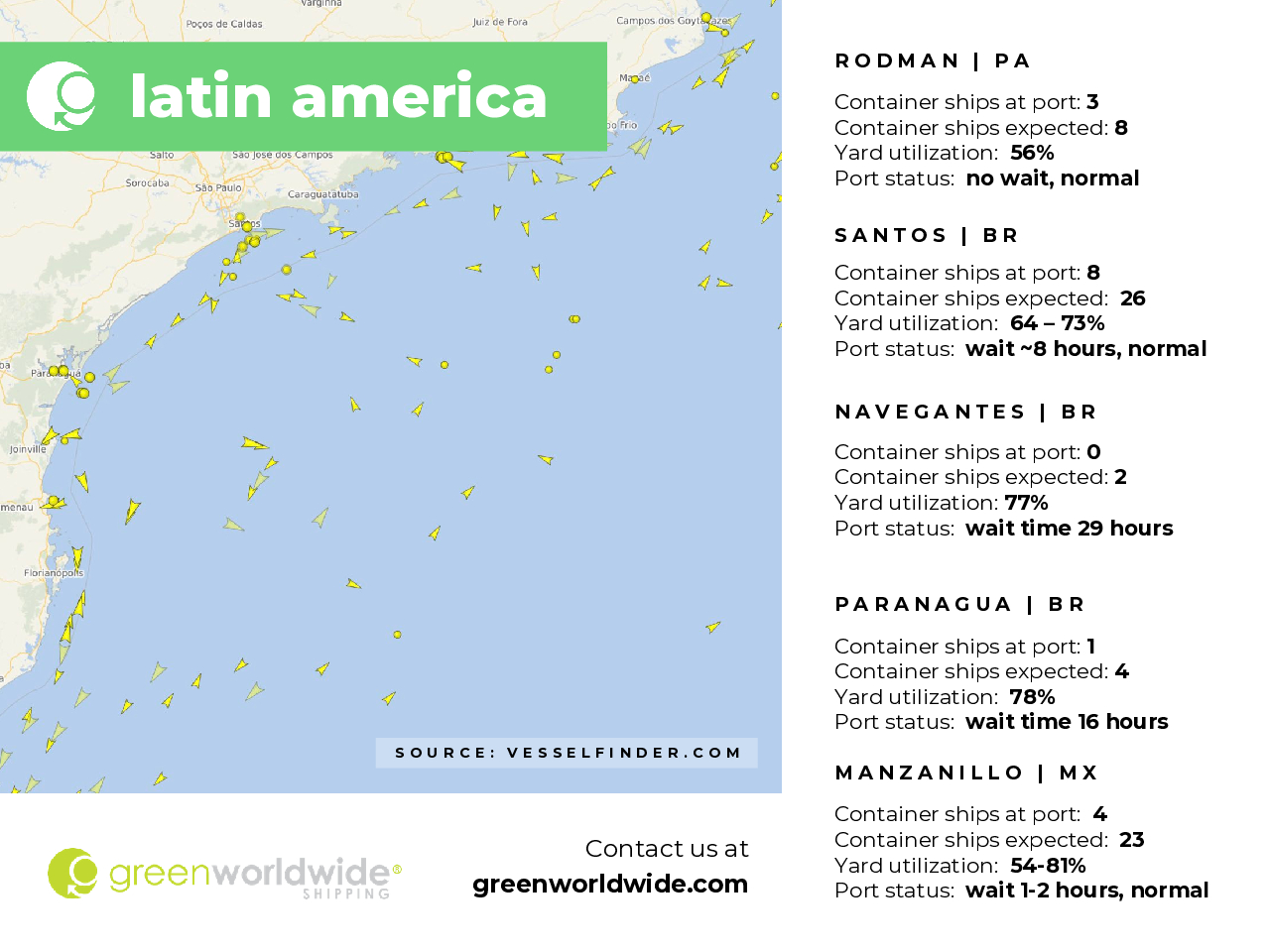
Effective July 22, a new 25% tariff applies to certain imports from Brazil. Additionally, an extra 50% tariff on certain Canadian goods under Section 338 of the Trade Act of 1930 is scheduled to take effect on August 19. Importers should review product classifications, shipment timing, and available exemptions as implementation guidance continues.
Beginning July 30, U.S. Customs and Border Protection (CBP) will also require importers of certain copper articles under four HTSUS classifications to report the primary country of smelt and cast on entry summaries.
Green Worldwide will continue monitoring CBP guidance and provide updates as additional information becomes available.
Stay up-to-date on freight news with Green’s Weekly Freight Market Update by following us on LinkedIn. For continuous updates, make sure to check out our website at greenworldwide.com.