

Global freight conditions remain uneven as China enters the Golden Week holiday period. Ocean carriers continue adjusting capacity across major East-West trades, while congestion at key Asian ports remains an important schedule risk.
Air cargo demand is also strengthening heading into Q4, Middle East energy flows are showing signs of recovery, German port labor negotiations remain unresolved ahead of an October 1 ballot deadline, and new U.S. Section 338 import prohibitions on certain Canadian-origin goods are now in effect.
MARKET SUMMARY OVERVIEW
Drewry's World Container Index decreased 1%, while the Intra-Asia Container Index increased 6% in its September 24 assessment.
Shanghai-to-Los Angeles rates increased 2%, while Shanghai-to-New York remained essentially unchanged. Asia-Europe pricing moved lower, with Shanghai-to-Genoa down 5% and Shanghai-to-Rotterdam down 4%.
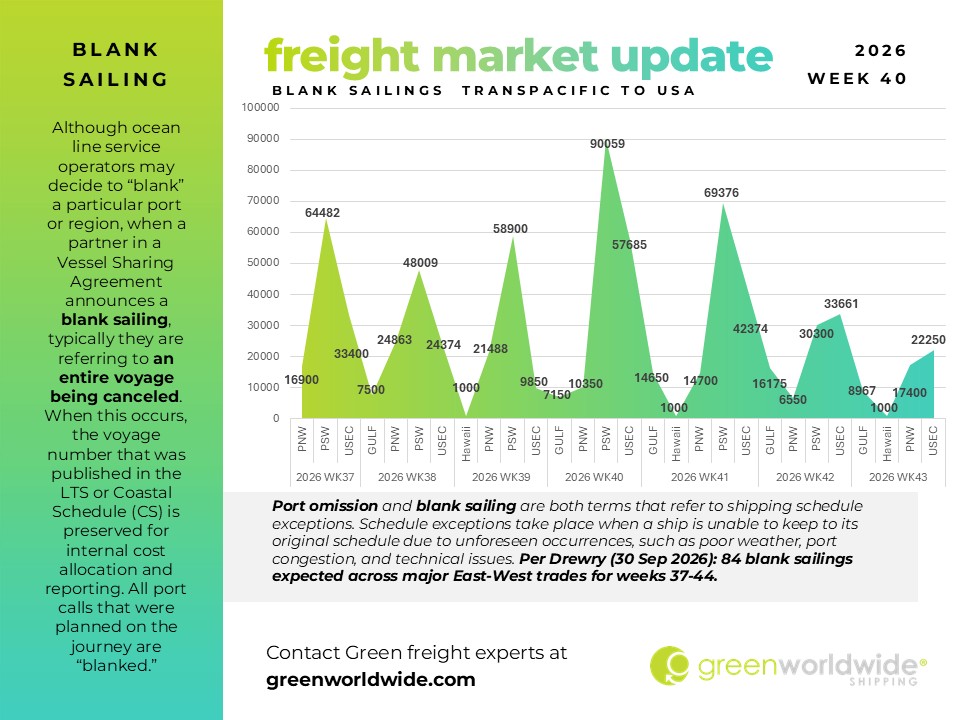
Capacity management also remains active around Golden Week. Drewry expects 58 blank sailings across 712 planned sailings between Weeks 40 and 44, representing an approximately 8% cancellation rate across the major East-West trades.
For importers, the market remains highly service specific. Overall scheduled capacity may remain available while individual sailings, port calls and cargo connections continue to shift around the holiday period.
GOLDEN WEEK CAPACITY ADJUSTMENTS CONTINUE
Carriers continue managing capacity as China enters its National Day and Golden Week holiday period.
Drewry's latest cancelled-sailings data shows 58 blank sailings expected between Weeks 40 and 44, while the large majority of scheduled East-West sailings are still expected to operate.
JOC has also reported that carriers have announced fewer Golden Week blank sailings so far this year than in the previous three years, although additional adjustments remain possible as the holiday period continues.
For importers, the primary risk is not necessarily a broad shortage of capacity, but changes at the individual service level.
Importers with Asia-origin cargo should continue monitoring:
- Blank sailings and revised vessel rotations
- Cargo cutoffs and post-holiday departures
- Available space on individual services
- Potential rollover exposure
- Transshipment and alternate connection plans
ASIA PORT CONGESTION REMAINS A SCHEDULE RISK
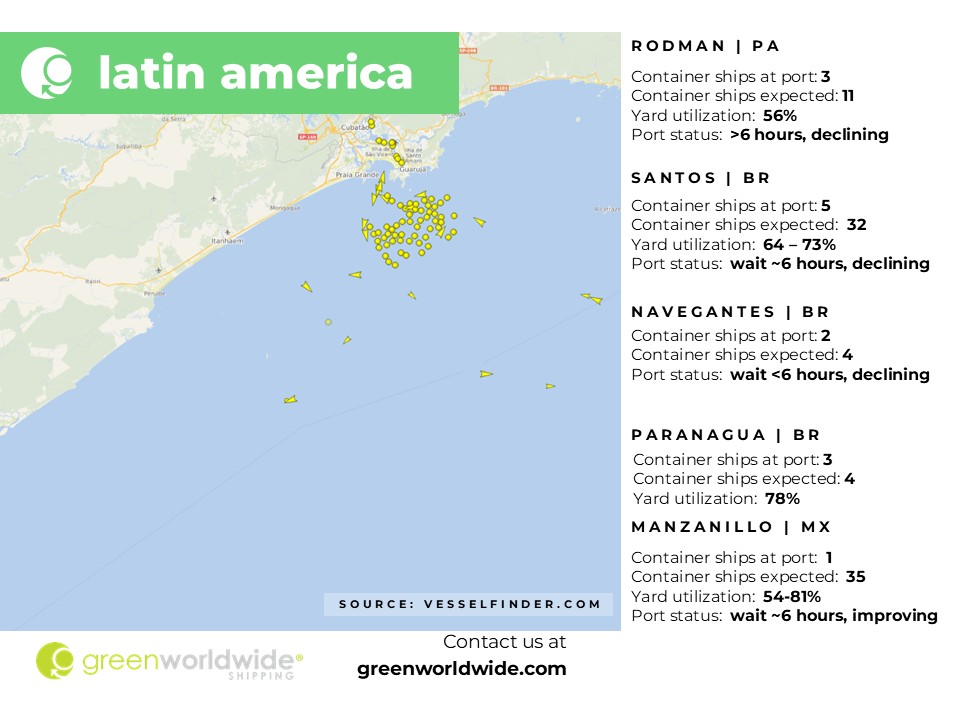
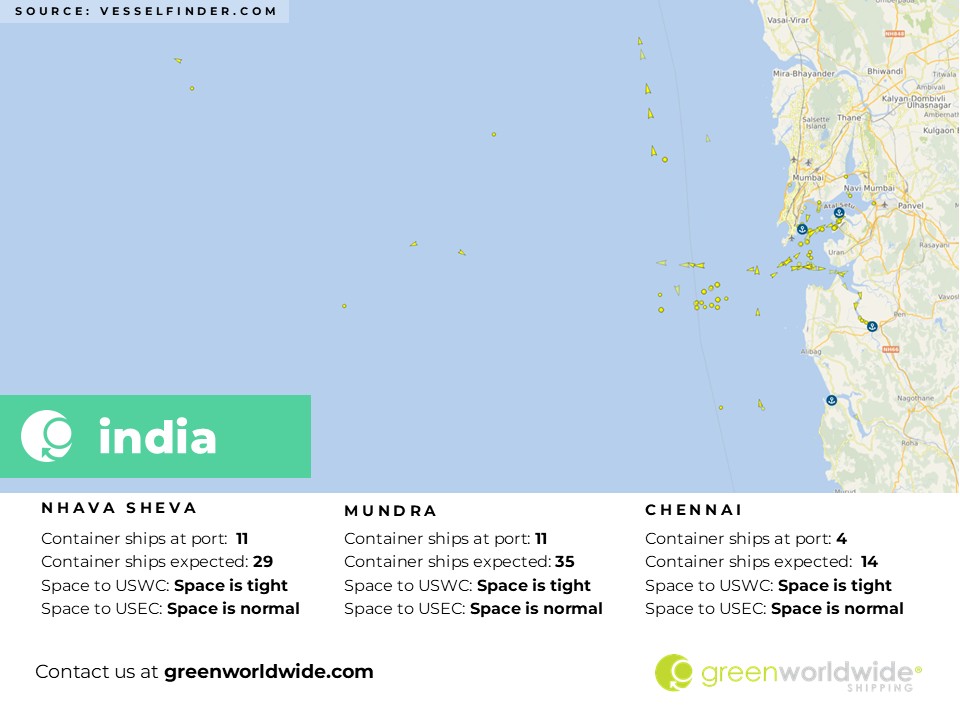
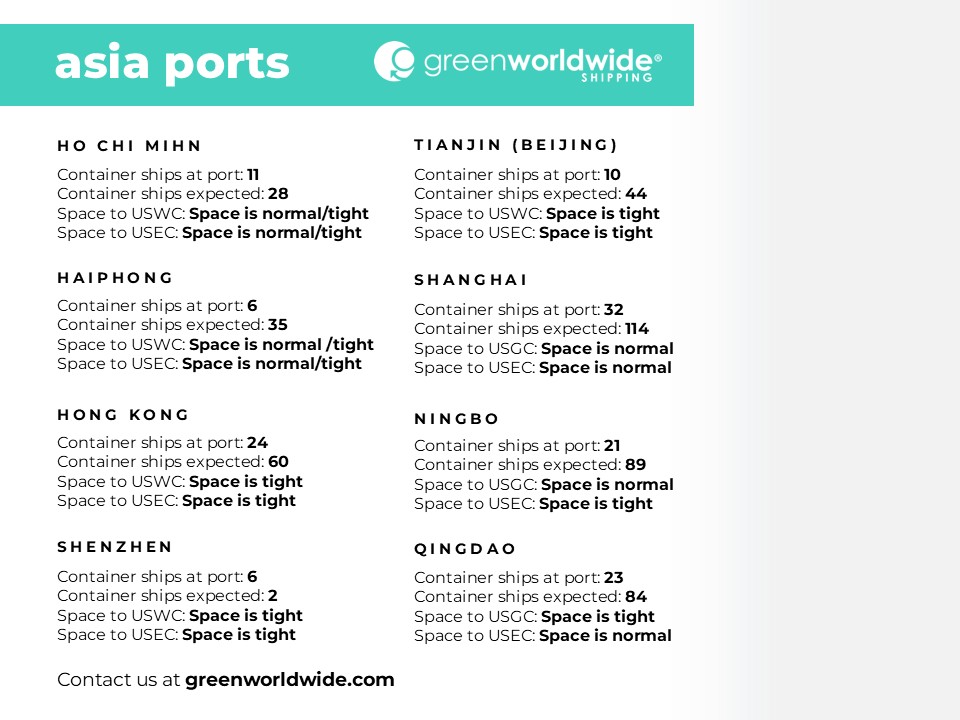
Congestion at major Asian ports remains an important source of schedule pressure following several weeks of severe weather and vessel disruption.
JOC reported September 28 that congestion across Asia may remain elevated into 2027 after a series of storms reduced schedule reliability and tied up a significant share of global fleet capacity. Arrival-to-berth times in Shanghai had improved to just under four days by mid-September, but broader congestion remained unresolved.
For importers, improving terminal conditions do not necessarily mean vessel schedules have fully normalized. Delayed ships, omitted calls and revised cargo connections can continue affecting freight after port conditions begin to improve.
Importers moving cargo through major Asian gateways should continue confirming current vessel rotations and connection plans before relying on previously published schedules.
AIR CARGO DEMAND CONTINUES HIGHER
Global air cargo tonnage increased for a fourth consecutive week in the latest WorldACD data.
Worldwide chargeable weight increased 2% week-over-week in Week 38 and was 8% higher year-over-year. Asia-Pacific origin tonnage increased 11% year-over-year.
Worldwide air cargo capacity was broadly stable week-over-week and increased 4% compared with the same period last year. Average global spot rates remained flat, but were 33% higher year-over-year.
For shippers relying on air freight for time sensitive inventory, continued demand growth reinforces the importance of reviewing capacity and routing early as the market moves into the fourth quarter.
MIDDLE EAST EXPORT FLOWS SHOW SIGNS OF RECOVERY
Energy export flows from the Middle East increased in September as Saudi Arabia restored part of its alternative export infrastructure.
Regional crude exports reached approximately 16.3 million barrels per day in September, the highest level since the current conflict began, although volumes remained below the roughly 19.5 million barrels per day recorded in February.
Saudi Arabia also resumed crude and refined product loadings from Yanbu following the restart of the East-West Pipeline. Current throughput remains below pre-disruption levels, with full restoration expected to take additional time.
For cargo moving through the region, conditions remain uneven and shipment level planning remains important. Routing, service availability and transit timing should continue to be reviewed before cargo is tendered.
GERMAN PORT LABOR BALLOT CLOSES OCTOBER 1
Labor negotiations at Germany's major seaports remain unresolved.
The current member ballot on potential indefinite strike action is scheduled to close October 1. JOC reports that unionized port workers are voting on whether to authorize further industrial action after rejecting the latest employer offer.
The applicable collective bargaining agreement covers approximately 11,000 employees across participating German port operations, including Hamburg, Bremen/Bremerhaven, Emden, Brake and Wilhelmshaven.
At this stage, no indefinite strike has been announced.
Importers and exporters using German gateways should continue monitoring the ballot outcome and maintain flexibility around time sensitive cargo until the next steps are known.
SECTION 338 IMPORT PROHIBITIONS NOW IN EFFECT
New U.S. import prohibitions on certain Canadian-origin products took effect September 29 at 12:01 a.m. Eastern Time.
The measures apply to specific products identified in the applicable proclamations and annexes, including certain Canadian alcoholic beverages, dairy products and motor-vehicle-related goods. They do not apply broadly to all Canadian goods in those categories.
For covered goods imported before September 29 but not yet entered for consumption or withdrawn from warehouse, the existing 50% additional duty treatment remains applicable instead of the import prohibition.
Importers should confirm product classification and scope before moving potentially affected Canadian-origin goods into the United States.
Stay up-to-date on freight news with Green’s Weekly Freight Market Update by following us on LinkedIn. For continuous updates, make sure to check out our website at greenworldwide.com.