

Global freight markets enter the second week of September with increasingly different conditions by trade lane. Trans-Pacific spot rates moved higher while Asia–Europe pricing declined, Intra-Asia rates continued to climb and carriers maintained active capacity management across the major East–West trades.
Panama Canal transit restrictions are now in effect, North European ports are recovering from recent labor actions, and air cargo demand remains resilient despite continued weakness on select Asia–Europe lanes.
MARKET SUMMARY OVERVIEW
Drewry's World Container Index remained unchanged for the week ending September 3, as stronger Trans-Pacific pricing offset declines on Asia–Europe routes.
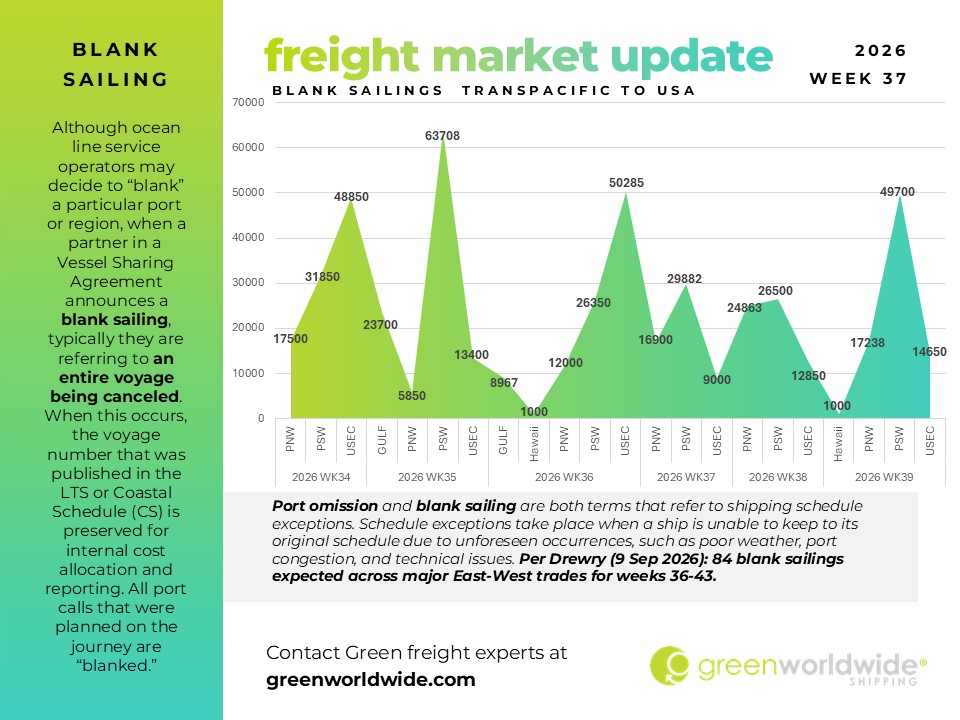
Capacity management also remains active. Drewry currently expects 47 blank sailings across 729 scheduled sailings between Weeks 37 and 41, representing approximately 6% of planned capacity across the major East–West trades
TRANS-PACIFIC RATES MOVE HIGHER
Trans-Pacific spot rates strengthened during the first week of September after several weeks of elevated pricing.
Shanghai–Los Angeles increased 5% week over week, while Shanghai–New York rose 3%. Drewry expects rates on the trade to remain broadly stable in the near term as carriers continue managing available capacity.
Blank sailing activity also remains part of the capacity picture, with six Trans-Pacific cancellations announced for the following week; double the number reported for the current week.
With China's Golden Week holiday approaching in October, importers with upcoming Asia–U.S. cargo should continue reviewing booking timelines, supplier readiness and available departures.
PANAMA CANAL TRANSIT RESTRICTIONS NOW IN EFFECT
Temporary Panama Canal capacity reductions took effect September 3 following below expected precipitation in the Canal watershed.
Daily availability is currently limited to nine Neopanamax slots and 25 Panamax slots. Panamax availability is scheduled to decline further to 23 daily slots beginning September 15.
The Panama Canal has also adjusted its daily auction process as part of its response to current water conditions. Canal officials warn that vessels arriving without confirmed reservations may experience increased waiting times and continue to encourage customers to secure transit reservations where possible.
The maximum authorized Neopanamax draft of 48 feet also took effect September 2, while a further reduction to 47.5 feet is currently scheduled for October 1.
Importers using Asia–U.S. East Coast, Gulf and other Panama dependent routings should continue monitoring vessel schedules and confirmed transit reservations.
NORTH EUROPEAN PORTS RECOVER FROM RECENT LABOR ACTION
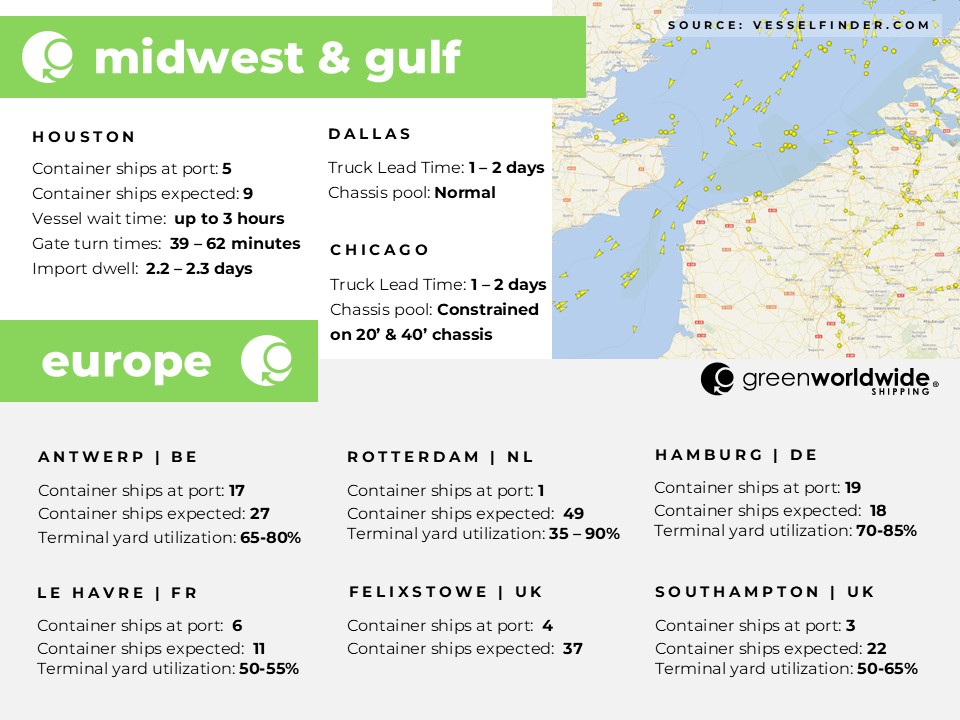
Port operations across Germany and the Netherlands are recovering following separate labor actions during the first week of September.
A 48-hour strike at German ports began September 2, while workers in Rotterdam, Amsterdam and Zeeland participated in separate strike action on September 4. The disruptions affected vessel services and terminal activity across key North European gateways.
While the immediate strike periods have ended, delayed vessel calls and cargo movements may take additional time to work back into schedule.
Importers with cargo moving through affected North European ports should continue monitoring vessel schedules, terminal availability and inland transportation connections as operations normalize.
AIR CARGO DEMAND REMAINS UNEVEN ACROSS KEY TRADE LANES
Global air cargo demand remains resilient entering September, but market conditions continue to vary significantly by origin and destination.
August air cargo volumes remained above year ago levels, while Asia continued to support overall demand. At the same time, China and Hong Kong–Europe flows have remained under pressure following changes to European Union import treatment for lower value e-commerce shipments.
Recent weekly data has shown early signs of stabilization on the trade, but volumes remain well below earlier levels.
For shippers using air freight, capacity and rate conditions should continue to be evaluated by individual trade lane rather than broader global trends.
CBP CONSIDERS EXPANDED IMPORT DISCLOSURES
U.S. Customs and Border Protection published an Advance Notice of Proposed Rulemaking on September 2 seeking industry feedback on potential changes designed to provide greater visibility into the supply chains of goods imported into the United States.
CBP is considering requirements involving additional information about parties involved in import transactions, foreign export documentation and technologies used to trace goods through international supply chains. The agency says the initiative is intended in part to improve its ability to identify illegal transshipment and other attempts to evade U.S. customs and trade requirements.
No new importer requirements have taken effect. The notice is an early step in the rulemaking process, and public comments are due by December 1, 2026.
Importers should continue monitoring the proposal and reviewing how supplier, country-of-origin and transaction documentation is maintained across their international supply chains.
Stay up-to-date on freight news with Green’s Weekly Freight Market Update by following us on LinkedIn. For continuous updates, make sure to check out our website at greenworldwide.com.