

Global freight conditions remain uneven as China exits the Golden Week holiday period. Trans-Pacific rates appear to be leveling off at elevated levels, while Asia–Europe pricing continues to ease as additional services return to shorter Suez routings. Capacity remains broadly available across the major East-West trades, but congestion at Asian ports continues to weigh on schedule reliability.
Elsewhere, tanker security risks have increased around the Strait of Hormuz, historic low water continues to restrict Rhine River transportation, the Panama Canal is preparing to add transit capacity, and potential strike action at major German seaports has been averted for now.
MARKET SUMMARY OVERVIEW
Drewry's World Container Index fell 1% for the week ending October 1.
On the Trans-Pacific, Shanghai–New York increased 1%, while Shanghai–Los Angeles remained stable. Asia–Europe rates continued lower, with Shanghai–Genoa down 3% and Shanghai–Rotterdam down 2%. Drewry expects additional near term pressure on rates as Golden Week factory closures reduce cargo volumes.
Intra-Asia pricing moved in the opposite direction, increasing another 2%, reaching an all-time high for the sixth consecutive week as congestion and operational disruption continued to tighten effective capacity.
BLANK SAILINGS DECLINE AS SUEZ ROUTINGS ADD EFFECTIVE CAPACITY
Capacity reductions across the major East-West trades have eased heading out of Golden Week.
Drewry currently lists 39 blank sailings from Weeks 41 through 45 out of 710 scheduled sailings, representing a cancellation rate of approximately 5%. About 95% of scheduled sailings are currently expected to operate.
At the same time, more container services are gradually returning to the shorter Suez route. Drewry reported that Suez containership transits in Week 39 were 68% higher than the same week last year, while additional services are expected to resume Red Sea transits during October.
The shift adds effective capacity on Asia–Europe trades by reducing voyage distances and vessel cycle times. However, security conditions around the Red Sea remain fluid, and individual routing decisions may continue to change.
Importers should confirm routing, sailing schedules and cutoff dates for post-holiday shipments rather than assuming all services have returned to normal Suez operations.
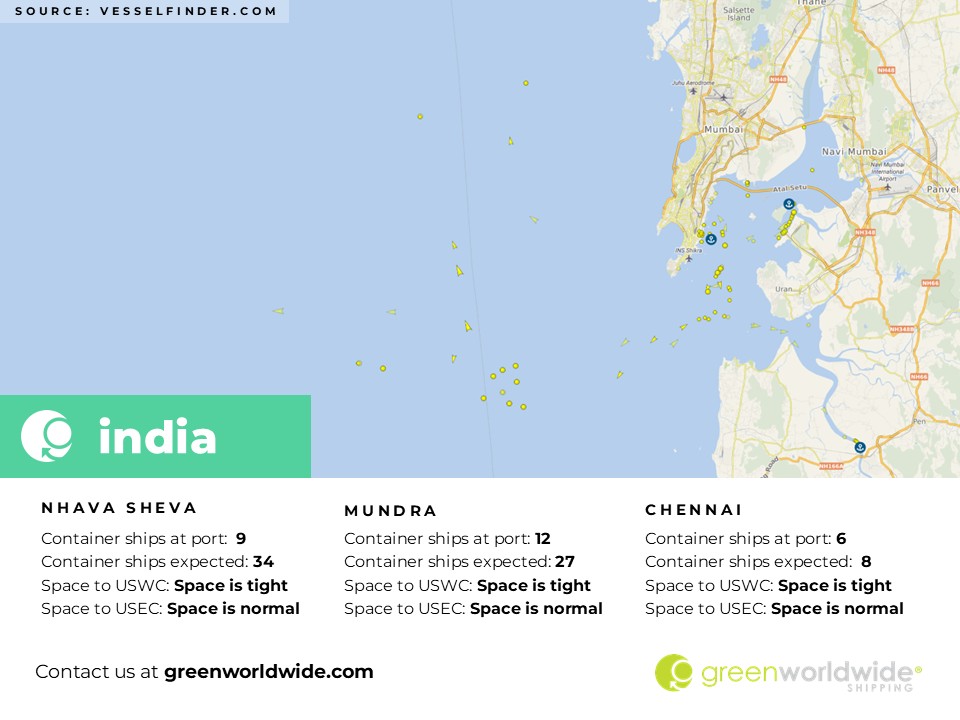
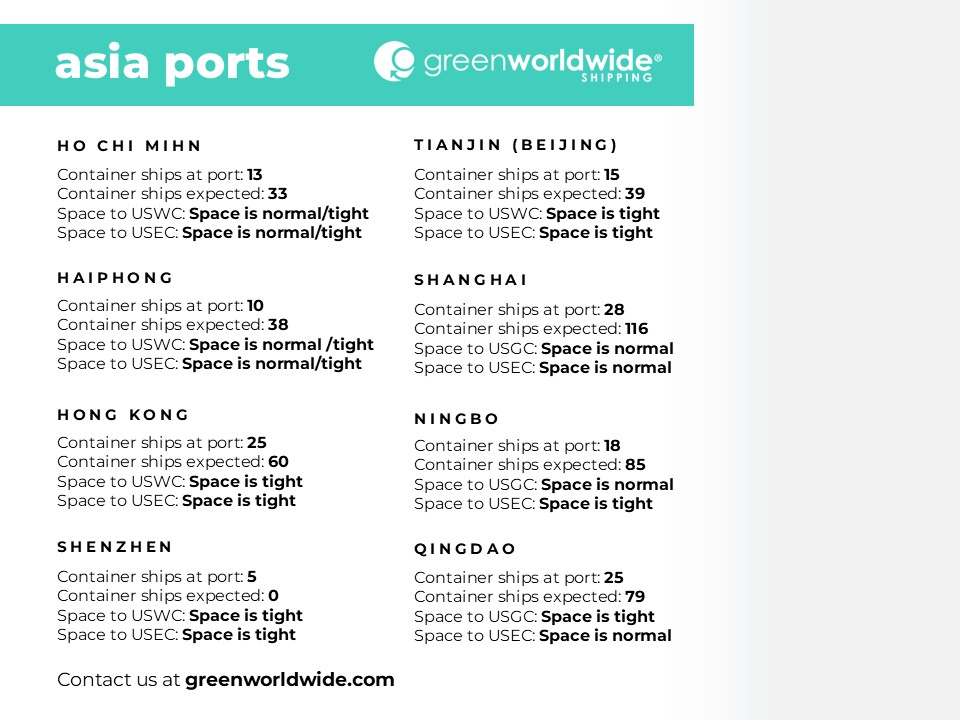
ASIA PORT CONGESTION CONTINUES TO WEIGH ON SCHEDULE RELIABILITY
Congestion across major Asian gateways remains a significant source of schedule disruption.
Sea-Intelligence reported that global container schedule reliability fell to 49.9% in August, the lowest level since September 2022, while average delays for late vessels increased to 6.81 days.
Conditions across Asia were significantly weaker. Regional schedule reliability fell to 32.3%, with China at 23.9%. Shanghai and Ningbo recorded particularly low reliability during the month as congestion spread across major Asian port networks.
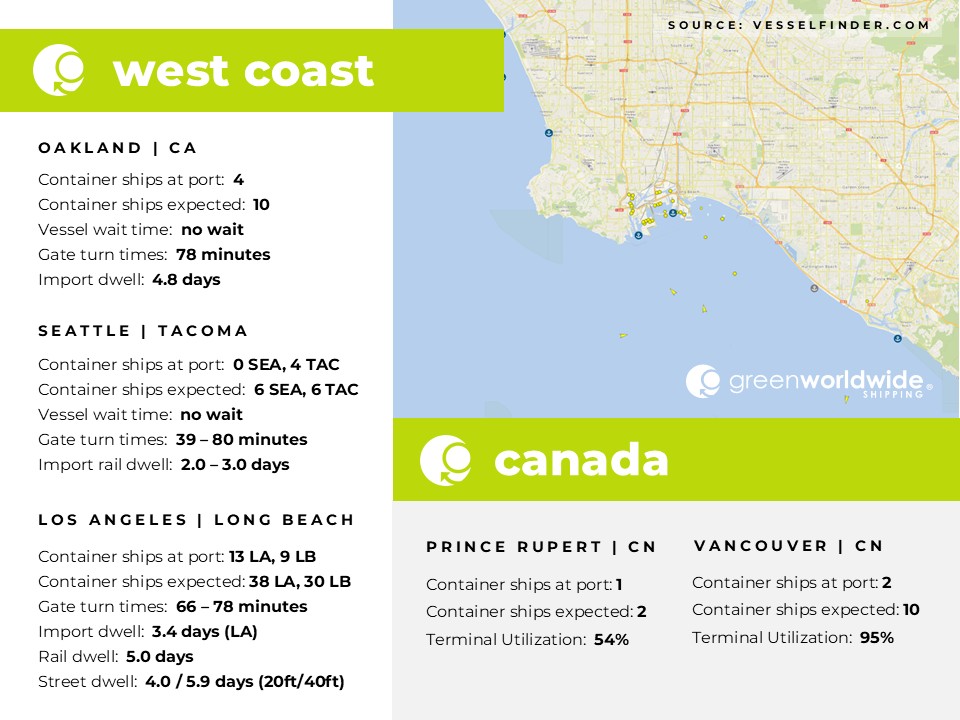
The effects are also carrying into the Trans-Pacific. Approximately 265,000 loaded import TEUs are expected to arrive at Los Angeles and Long Beach during the week of October 11–17, creating another heavy inbound week for Southern California.
Importers moving cargo through major Asian gateways should continue allowing additional time for vessel delays and schedule changes as networks work through post-holiday volumes.
STRAIT OF HORMUZ SECURITY RISK INCREASES
Security conditions around the Strait of Hormuz deteriorated further over the past week.
At least 12 incidents involving oil, LNG and LPG tankers were reported between September 28 and October 5, according to maritime security sources cited by Reuters. That represents the highest number reported in a single week since the current conflict began.
The immediate impact remains concentrated in tanker and energy markets, but continued instability can affect freight and insurance costs, bunker pricing and vessel deployment across the broader region.
Cargo moving through the Gulf and surrounding trade lanes should continue to be reviewed shipment by shipment as security conditions change.
RHINE LOW WATER CONTINUES TO RESTRICT INLAND SHIPPING
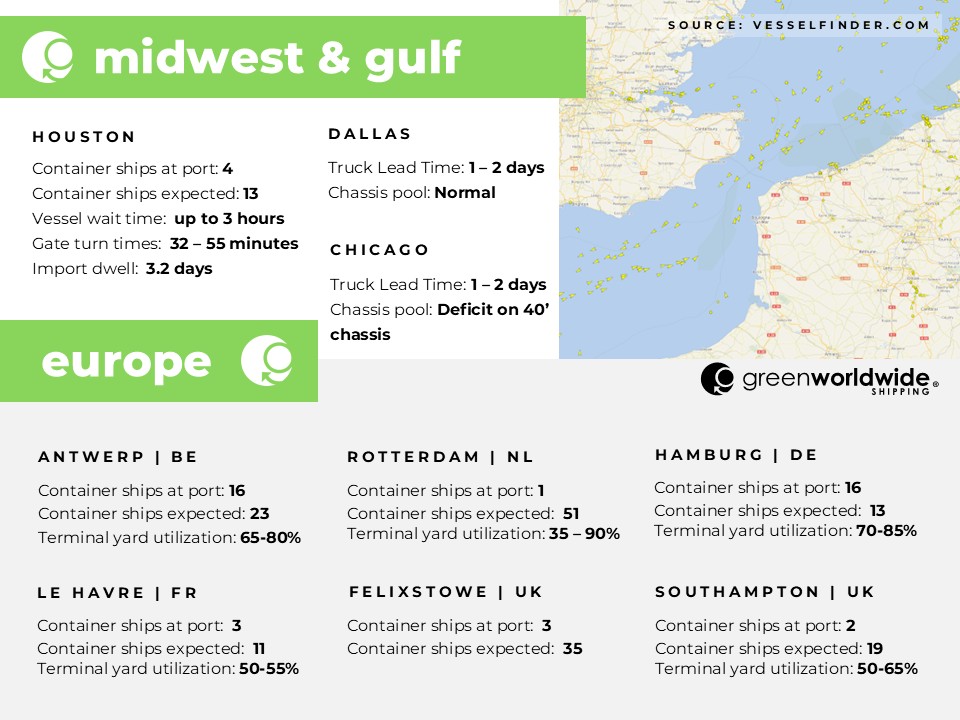
Water levels on the Rhine remain near historic lows following exceptionally dry conditions across the region.
The Kaub gauge, a critical point for commercial navigation, fell below zero in late September, severely restricting loaded barge movements through the affected section of the river.
Low water reduces the amount of cargo barges can safely carry and increases reliance on rail and trucking alternatives. Those modes may provide additional options, but available capacity cannot necessarily replace lost river transportation on a one-for-one basis.
For cargo moving between North European ports and inland Rhine destinations, importers should confirm barge availability, load restrictions and alternate inland transportation options before finalizing delivery plans.
PANAMA CANAL ADDS TRANSIT CAPACITY
Improved rainfall and ongoing water management measures are allowing the Panama Canal to ease some recent operating restrictions.
The maximum authorized draft for vessels using the Neopanamax locks has increased to 49 feet.
Beginning October 15, Neopanamax availability will increase to 10 daily transits, bringing combined Panamax and Neopanamax capacity to 33 daily transit slots.
The Canal continues to report a water deficit across the watershed, however, and the reservation system remains the only way to guarantee a transit date. Vessels without reservations may still face delays.
Shippers using Panama for Asia–U.S. East Coast and Gulf routings should continue confirming reservations and vessel schedules as operating conditions change.
GERMAN PORT STRIKE ACTION AVERTED FOR NOW
Potential indefinite strike action at Germany's major seaports has been averted following the latest round of labor negotiations.
The union's federal bargaining commission accepted the employers' latest offer on October 6, covering approximately 11,000 port employees in Hamburg, Bremen, Bremerhaven, Emden, Brake and Wilhelmshaven. Formal approval from the employers' side is still pending.
The development reduces the immediate risk of additional strike related disruption at Germany's major gateways. Importers should continue monitoring terminal conditions as ports work through existing congestion and schedule delays.
AIR CARGO VOLUMES EASE WHILE PRICING REMAINS FIRM
Global air cargo demand softened at the end of September, while pricing continued to move higher.
WorldACD reported global chargeable weight declined 4% week-over-week in Week 39, although volumes remained 5% above the same period last year.
Asia-Pacific origin tonnage fell 7% week-over-week, partly reflecting holidays in China and Japan. Asia-Pacific volumes to the U.S. declined 2% for the week but remained 14% higher year-over-year.
Pricing moved in the opposite direction. Average global rates increased 2% week-over-week and 27% year-over-year, while Asia-Pacific-to-U.S. rates were unchanged for the week but remained 38% above last year. Global capacity was unchanged for a third consecutive week.
Shippers planning time sensitive air cargo should continue reviewing lane specific capacity and pricing as Chinese factories resume operations following Golden Week.
REGULATORY UPDATE: CHINA LINKED VESSEL FEE SUSPENSION STILL AWAITS FORMAL U.S. ACTION
The broader U.S.–China trade truce has been extended through January 10, 2027, but the separate suspension of U.S. Section 301 port fees targeting certain China linked vessels has not yet been formally extended.
Under the currently published USTR action, the suspension remains scheduled to expire at 11:59 p.m. ET on November 9, with the fees becoming applicable again November 10 unless USTR issues a formal modification.
Importers and transportation providers should continue monitoring USTR guidance rather than treating the broader trade truce extension as confirmation that the maritime fee suspension has also moved.
Stay up-to-date on freight news with Green’s Weekly Freight Market Update by following us on LinkedIn. For continuous updates, make sure to check out our website at greenworldwide.com.