

Global freight conditions remain active heading into the second half of August. U.S. import volumes remain elevated following an early peak season, Trans-Pacific rates are moving higher as carriers manage capacity, and Asia-Europe pricing continues to ease. Labor action at major German ports, changing conditions across the Suez and Panama Canals, and new U.S. tariff requirements are also creating additional considerations for shippers.
MARKET SUMMARY OVERVIEW
Trans-Pacific demand remains firm despite expectations that the tariff driven early peak season will begin easing through the remainder of summer. Drewry's World Container Index increased 1% to $4,339 per 40-foot container during the week of August 13, with Shanghai-to-New York and Shanghai-to-Los Angeles rates both moving higher.
Carriers continue managing capacity as strong near term demand, congestion, and changing global routings influence freight costs. Asia-Europe pricing, meanwhile, continues to ease from July highs.
Importers should continue monitoring capacity and rate movement as September shipping plans develop.
U.S. IMPORT VOLUMES REMAIN STRONG
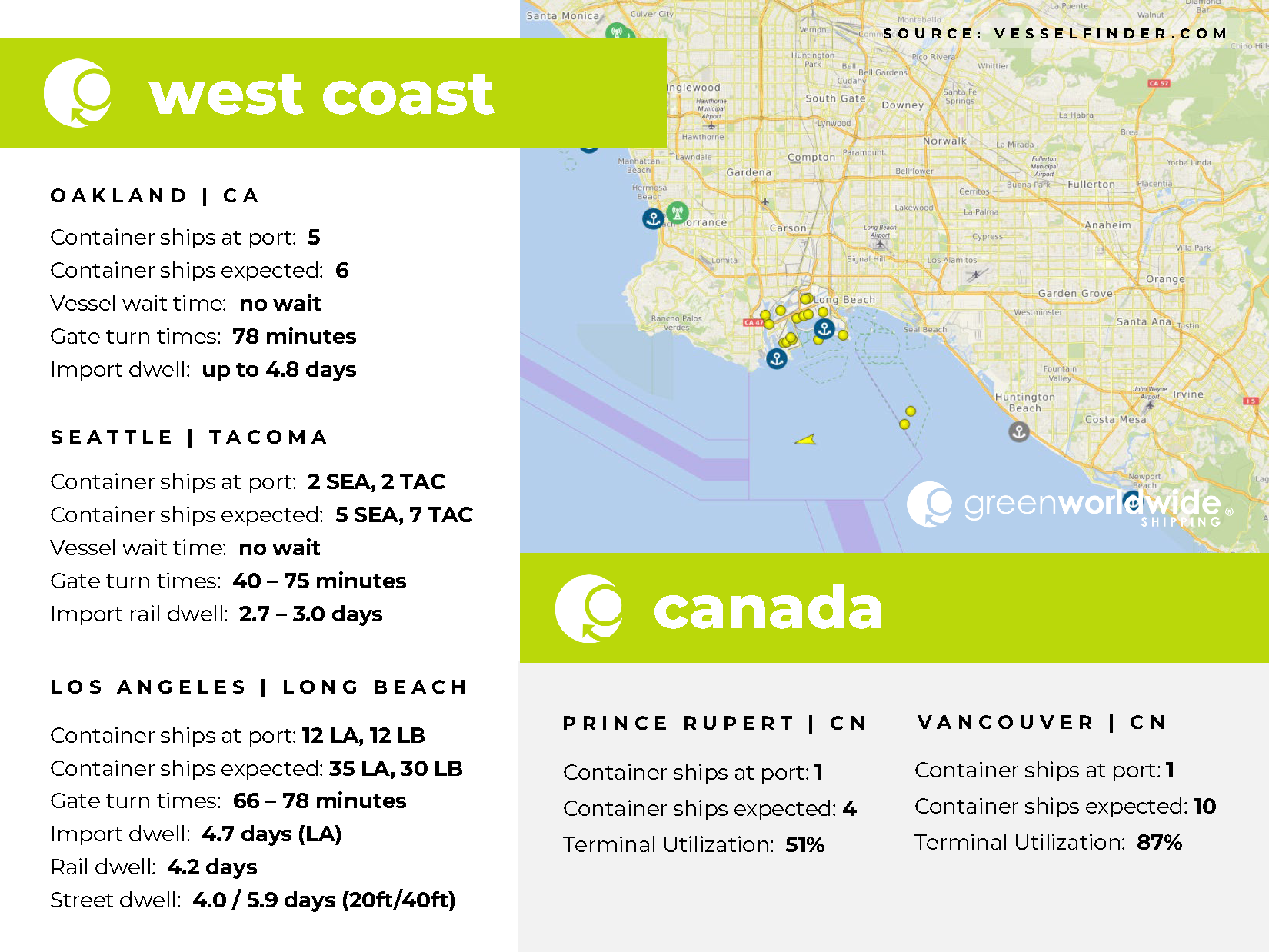
The Port of Los Angeles handled 960,464 TEUs in July, its second busiest July on record, with loaded imports reaching 499,552 TEUs. The Port of Long Beach also reported its second busiest July.
Los Angeles expects August volumes to remain above 900,000 TEUs, although the broader outlook points toward gradually softer import activity through the remainder of the year as earlier tariff-driven frontloading begins to unwind.
NRF/Hackett's Global Port Tracker projects major U.S. ports will handle 2.22 million TEUs in August before volumes decline heading into the fall.
TRANS-PACIFIC RATES CLIMB AS CARRIERS MANAGE CAPACITY
Trans-Pacific spot rates have increased for two consecutive weeks. Freightos reported Asia–U.S. West Coast rates increasing 9% and East Coast rates increasing 3% in the latest week as demand remains firm and carriers continue adjusting available capacity.
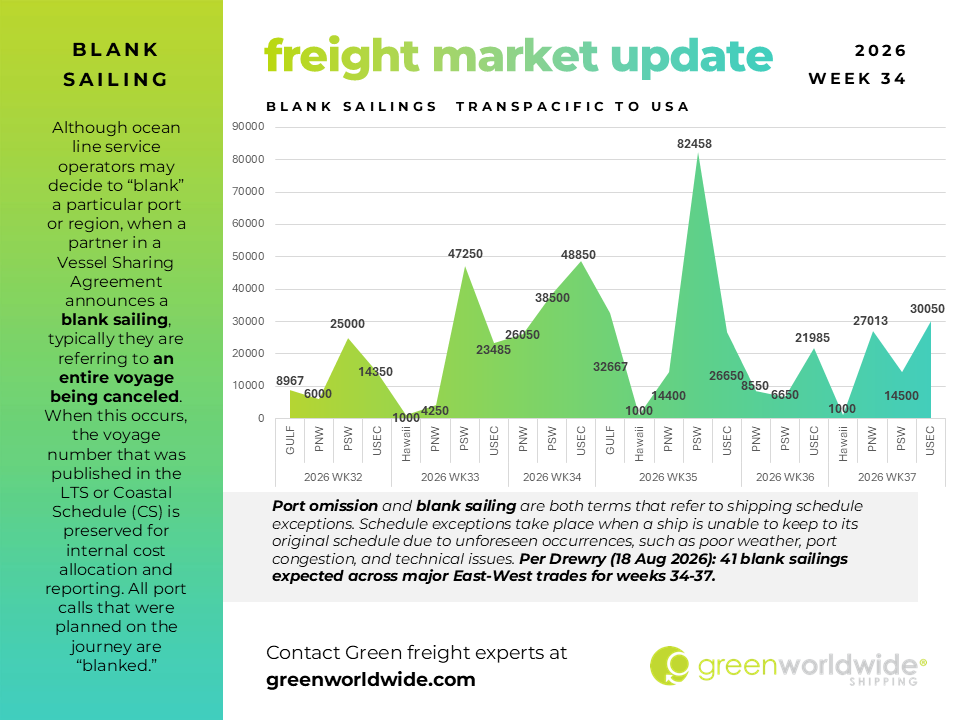
Drewry is tracking 49 blank sailings across major east-west trades between Weeks 34 and 38, with Trans-Pacific eastbound services accounting for 59% of announced cancellations. A larger concentration of blank sailings is currently expected between August 31 and September 6.
Shippers should continue securing space early for time-sensitive cargo and maintain flexibility around planned sailing schedules.
ASIA-EUROPE RATES EASE FROM JULY PEAK
Asia–Northern Europe rates have fallen approximately 20% from their July peak, while Asia–Mediterranean pricing has also moved lower as the region's early peak season begins to unwind.
Rates remain elevated compared with pre-peak levels, and port congestion continues creating uneven conditions across individual origins and services. Importers should continue monitoring specific trade lanes rather than assuming broader rate declines will apply evenly across the market.
GERMAN PORT STRIKES DISRUPT CARGO OPERATIONS
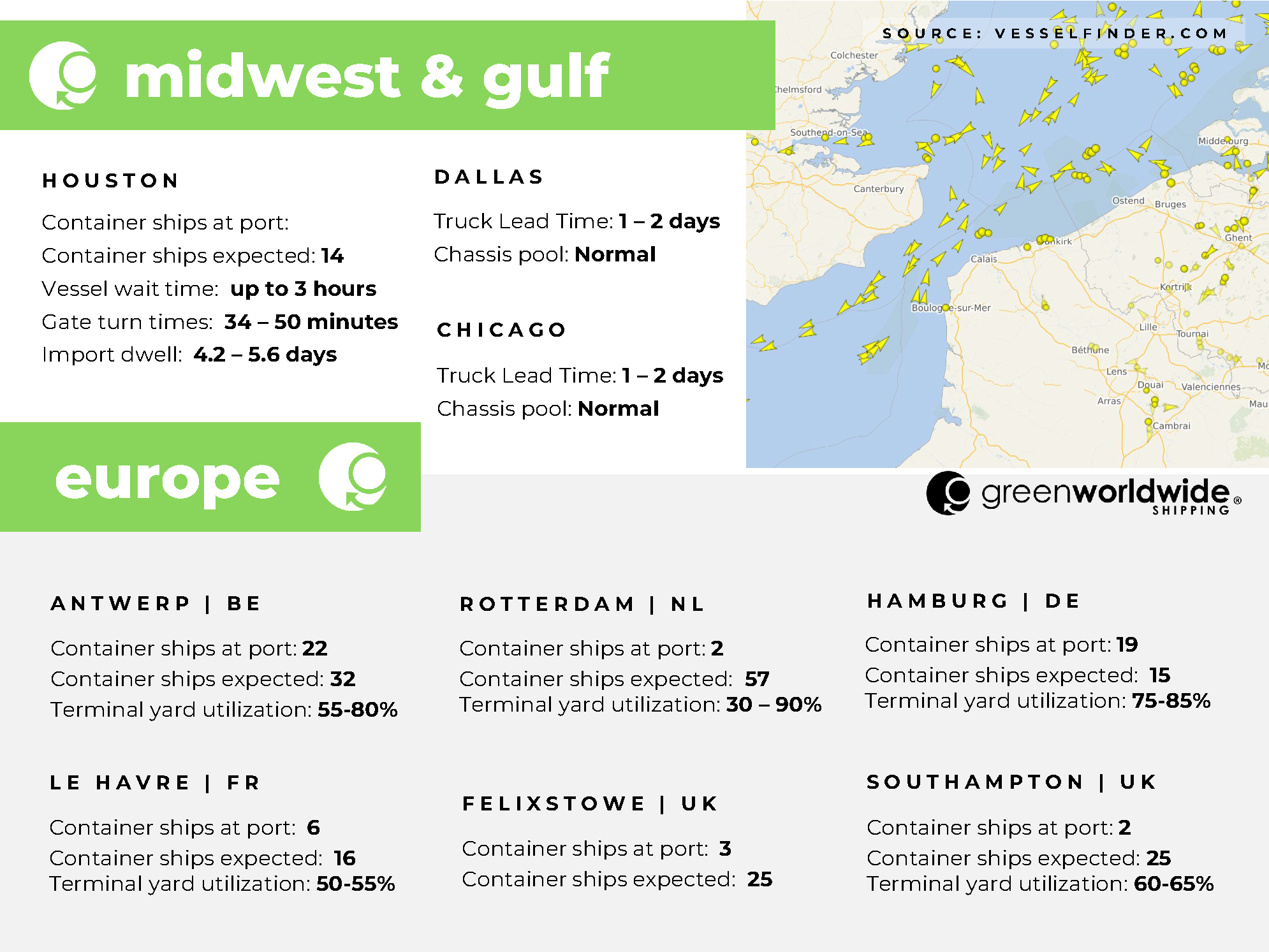
A 24-hour warning strike affecting six major German seaports: including Hamburg, Bremerhaven, Bremen, Wilhelmshaven, Emden, and Brake concluded this week after disrupting cargo handling operations.
The labor action comes as wage negotiations continue between verdi and the Central Association of German Seaport Companies (ZDS), with additional negotiations scheduled in Hamburg.
Importers with cargo moving through affected German ports should continue monitoring terminal operations and vessel schedules as facilities manage potential backlogs.
SHANGHAI CONGESTION PROMPTS SERVICE ADJUSTMENTS
Typhoon related disruption and vessel bunching at Shanghai are prompting carriers to adjust service rotations.
Several services are temporarily omitting Shanghai calls, with affected cargo being routed through alternative ports including Busan. Other carrier network adjustments are also underway as operators respond to congestion and shifting demand.
Shippers moving cargo through Shanghai should confirm current vessel assignments and allow additional flexibility around planned sailing schedules.
RED SEA AND SUEZ ROUTING REMAINS IN TRANSITION
Maersk and Hapag-Lloyd continue gradually returning select Gemini Cooperation services to the Suez Canal, including additional Asia–Mediterranean–Europe services this month.
The changes represent continued movement toward shorter Trans-Suez routings, but broader container traffic through the canal remains below pre-disruption levels. Most major carriers continue evaluating Red Sea routing on a service-by-service basis.
Importers should continue confirming routing and transit expectations when booking cargo rather than assuming a broader return to normal operations.
PANAMA CANAL CONDITIONS REQUIRE MONITORING
The Panama Canal Authority continues managing water levels as El Niño conditions increase the risk of lower water availability later this year.
Water conservation measures and potential draft restrictions could affect vessel operations, while some carriers have announced surcharges on Panama routed services beginning in September.
Importers utilizing Asia–U.S. East Coast services through Panama should continue monitoring carrier advisories, transit conditions, and potential surcharge exposure.
AIR CARGO DEMAND REMAINS STRONG
Global air cargo demand increased 8.5% year over year in June, according to IATA, while capacity increased 4.4%.
More recent market conditions remain particularly tight in Taiwan and South Korea, where technology, AI server, and semiconductor exports continue absorbing available capacity.
Shippers moving time sensitive cargo from these markets should continue securing capacity early and allowing flexibility around routing and pricing.
SECTION 338 TARIFFS ON CERTAIN CANADIAN IMPORTS TAKE EFFECT
New Section 338 tariffs on certain Canadian origin products took effect August 19, imposing an additional 50% duty on covered merchandise.
Importers should review Canadian origin products, confirm HTSUS classifications, and determine whether upcoming entries fall within the scope of the new tariffs.
Green Worldwide Shipping continues monitoring implementation guidance and will provide additional updates as information becomes available.
Stay up-to-date on freight news with Green's Weekly Freight Market Update by following us on LinkedIn. For continuous updates, make sure to check out our website at greenworldwide.com.
Stay up-to-date on freight news with Green’s Weekly Freight Market Update by following us on LinkedIn. For continuous updates, make sure to check out our website at greenworldwide.com.