
Ocean spot rates declined for a fourth consecutive week, with continued weakness across the Trans-Pacific and mixed pricing on Asia-Europe trade lanes. Announced blank sailings decreased as a share of scheduled voyages, although schedule reliability across major East-West services weakened in October.
The immediate threat of a labor disruption at the Ports of Los Angeles and Long Beach has eased following a tentative contract agreement, while inland rail backlogs remain elevated. On the East Coast, the Port of Savannah reported its second-highest monthly container volume on record.
Internationally, the Panama Canal has expanded booking capacity, Northern European port congestion is affecting empty container repositioning, and industrial action in Belgium disrupted air cargo operations. Global air freight pricing continued to increase despite a decline in weekly cargo volumes.
MARKET SUMMARY OVERVIEW
Drewry's World Container Index declined 3% on November 19, marking its fourth consecutive weekly decrease. Despite the recent declines, the index remains 126% higher than during the corresponding period last year.
Trans-Pacific pricing moved lower for a seventh consecutive week. Shanghai-to-New York rates decreased 9%, reaching their lowest level in 15 weeks, while Shanghai-to-Los Angeles rates fell 5%, reaching a 12-week low.
Asia-Europe pricing was mixed. Shanghai-to-Genoa rates increased 6% following three weeks of stability, while Shanghai-to-Rotterdam rates remained unchanged.
Drewry anticipates additional downward pressure on Trans-Pacific pricing amid weaker demand. On Asia-Europe and Mediterranean services, the research firm expects demand to strengthen approaching December.
Peak-season surcharges have also been announced for December on Asia-Europe and Mediterranean trade lanes. These represent planned pricing adjustments rather than confirmed increases in achieved spot rates.
BLANK SAILINGS AND OCEAN SCHEDULE RELIABILITY
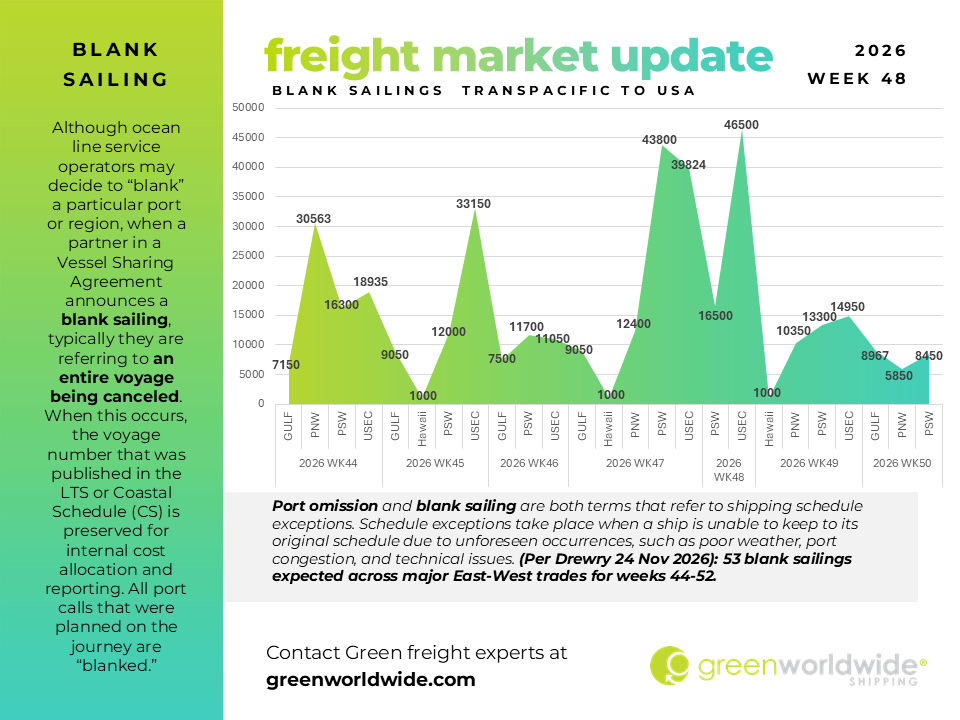
Drewry's November 20 Cancelled Sailings Tracker identifies 42 announced blank sailings among 724 scheduled voyages across Weeks 48 through 52, covering November 23 through December 27.
The projected cancellation rate stands at 6%, compared with 7% in the previous weekly report.
Announced cancellations are distributed across the following trade lanes:
- Trans-Pacific eastbound: 48%
- Asia-North Europe and Mediterranean: 33%
- Transatlantic: 19%
Approximately 94% of scheduled voyages are expected to operate during the five-week reporting period.
Drewry's separate weekly capacity assessment identifies 10 Trans-Pacific cancellations for Week 48, compared with four in Week 47. Asia-Europe and Mediterranean cancellations decreased from five to four over the same period.
Schedule reliability remains a separate operational concern. On-time performance across major East-West trades declined from 40% in September to 34% in October.
Changes in vessel deployments, port congestion and inland transportation constraints continue to affect ocean service consistency.
LOS ANGELES AND LONG BEACH LABOR TALKS REACH TENTATIVE AGREEMENT
The Pacific Maritime Association (PMA) announced on November 21 that negotiations with International Longshore and Warehouse Union (ILWU) Local 26 resulted in a tentative contract agreement.
The agreement covers approximately 250 marine terminal watchmen at the Ports of Los Angeles and Long Beach.
Ratification by Local 26 members remains pending, and the existing contract has been extended while that process takes place.
The announcement reduces the immediate risk of labor disruption at the San Pedro Bay port complex following more than a year of negotiations and multiple contract extensions.
Existing terminal and inland transportation constraints remain separate from the labor agreement.
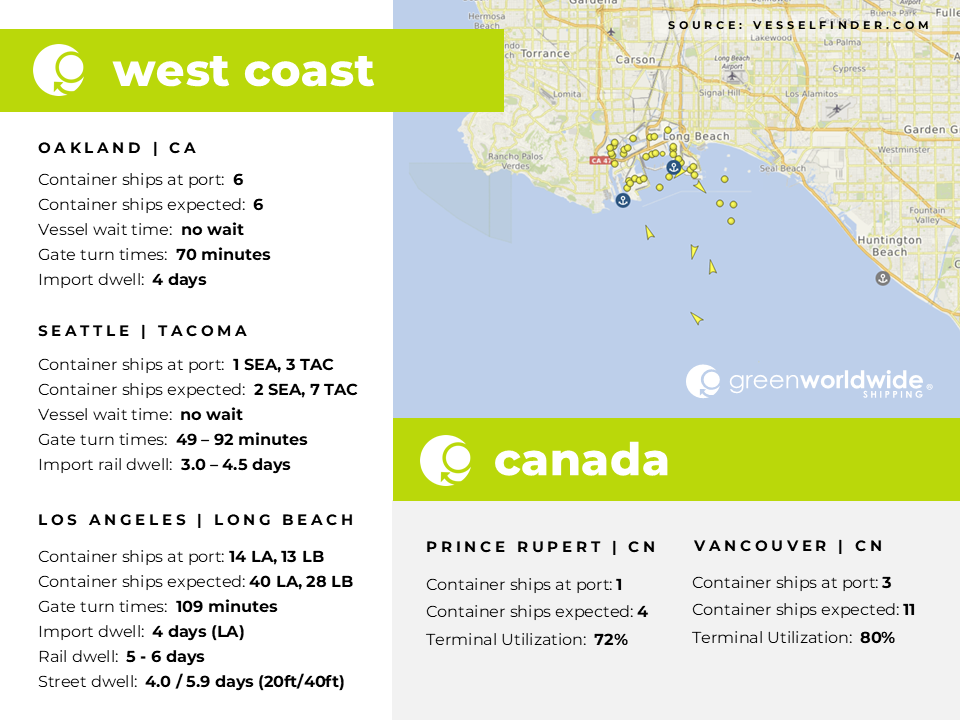
SOUTHERN CALIFORNIA RAIL BACKLOGS REMAIN ELEVATED
More than 44,600 import containers were awaiting on-dock rail transportation across the Ports of Los Angeles and Long Beach as of November 24, according to daily port data compiled by The Dwell.
At the Port of Los Angeles, 20,147 import containers were awaiting rail movement, with 42.7% having remained at the terminals for nine days or longer.
At the Port of Long Beach, 24,486 import containers were awaiting rail transportation, with 30.6% having waited nine days or longer.
The number of rail-bound import containers at Long Beach waiting at least nine days increased from 5,445 on November 3 to 7,496 on November 24.
These figures represent the inventory of containers awaiting on-dock rail movement rather than average container dwell times.
Importers utilizing Southern California gateways for inland rail transportation should continue monitoring container availability, rail departures and inland delivery schedules.
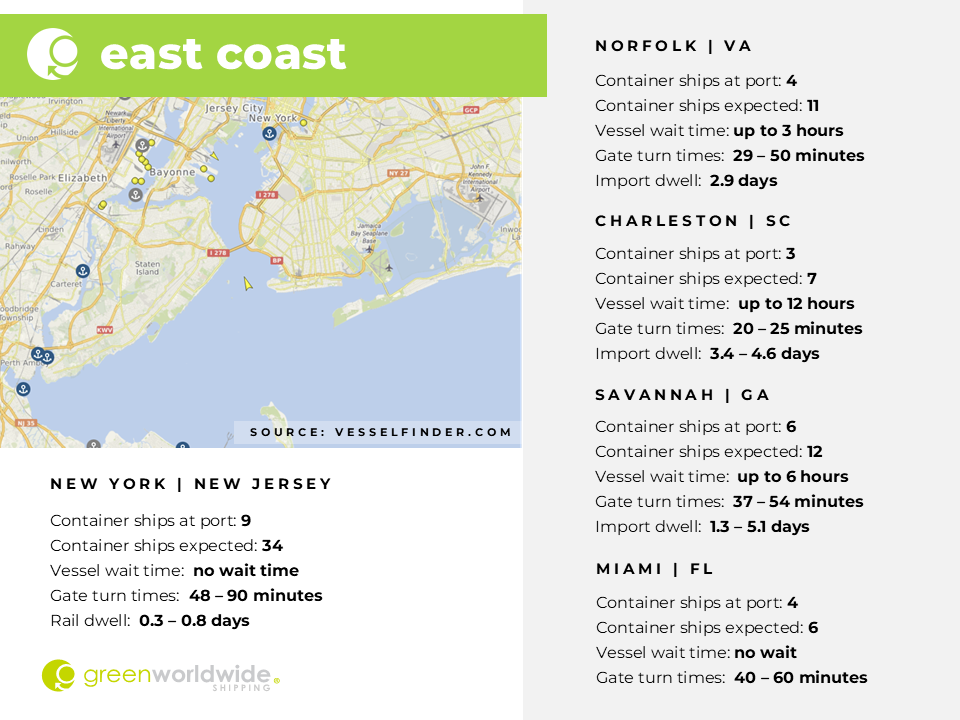
PORT OF SAVANNAH RECORDS 25% CONTAINER VOLUME GROWTH
The Port of Savannah processed 565,366 twenty-foot equivalent units (TEUs) in October, representing a 25% increase over October 2025 and the second highest monthly container volume in the port's history.
Container activity for fiscal year 2027 to date increased 7.8%, while October vessel calls reached 160, an increase of 5% year-over-year.
Georgia Ports Authority also reported that the resumption of Suez Canal routing on certain services has reduced transit times to Savannah by 10 to 12 days.
Capacity expansion continues at Ocean Terminal, where a $1.6 billion redevelopment project is more than 60% complete.
Once completed, the project is designed to increase the terminal's annual container handling capacity from 200,000 TEUs to 1.75 million TEUs.
NORTH AMERICAN INTERMODAL RAIL VOLUMES CONTINUE TO INCREASE
North American intermodal rail traffic maintained year-over-year growth during the week ending November 14, according to the Association of American Railroads (AAR).
U.S. railroads transported 299,659 intermodal containers and trailers during the reporting week, an increase of 10.7% compared with the corresponding week in 2025.
Combined U.S. carload and intermodal traffic increased 7.3% year-over-year. Through the first 45 weeks of 2026, U.S. intermodal traffic reached approximately 12.87 million units, an increase of 5% over the corresponding period last year.
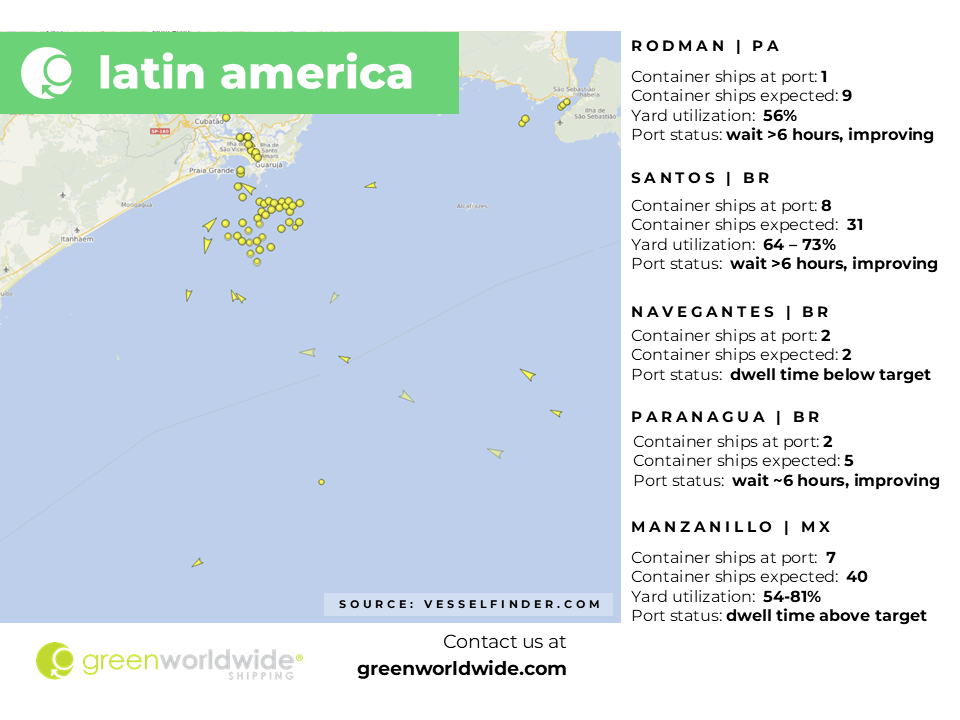
PANAMA CANAL EXPANDS DAILY BOOKING CAPACITY
The Panama Canal Authority (ACP) has increased daily booking capacity from 33 to 34 vessel slots following improvements in water availability and operating conditions.
The revised allocation provides 24 daily slots at the Panamax locks and 10 at the Neopanamax locks.
The maximum allowable draft at the Neopanamax locks has also returned to 50 feet.
The additional Panamax booking slot initially became available through auction and special competition arrangements. For transit dates beginning November 24, the slot is incorporated into the regular Second Competition Period.
The ACP attributed the adjustments to improved water conditions, favorable hydrological projections and water conservation measures implemented at the locks.
The expanded booking allocation and higher authorized draft provide additional operating flexibility for vessels utilizing the waterway, including services connecting Asia with the U.S. East and Gulf Coasts.
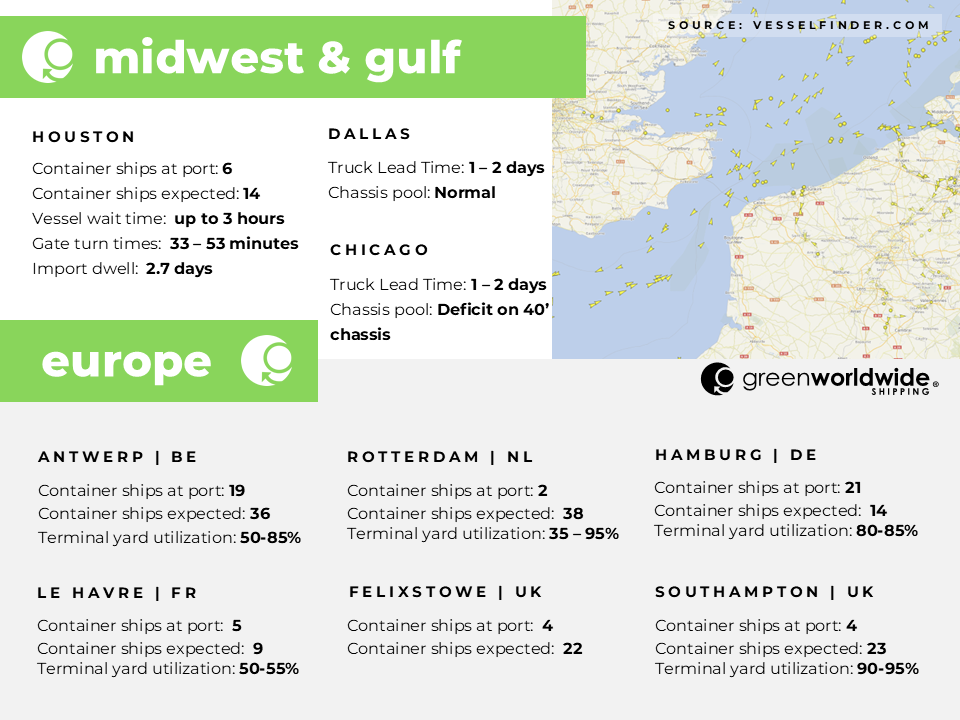
NORTHERN EUROPEAN PORT CONGESTION AFFECTS EMPTY CONTAINER REPOSITIONING
Drewry's November 19 market assessment identified worsening congestion at Northern European ports, with delays affecting the return of empty containers to Asia.
The disruption comes as ocean service deployments continue to change and some services resume Suez Canal routings.
Drewry identified delayed empty container repositioning as a potential equipment availability concern for Asian export markets.
Shippers with upcoming Asia-Europe bookings should continue monitoring equipment availability and service schedules.
STRAIT OF HORMUZ AND MIDDLE EAST MARITIME SECURITY
The International Maritime Organization (IMO) reported 141 confirmed maritime incidents across the Strait of Hormuz and surrounding Middle East waters as of November 23, an increase from 138 in the previous weekly update.
The cumulative number of confirmed seafarer fatalities remains at 25.
The updated figures reflect continuing maritime security risks across the region.
Companies with shipments moving through affected waterways should maintain visibility into vessel routing, schedule adjustments and regional operating conditions.
GLOBAL AIR CARGO PRICING INCREASES FOR SEVENTH CONSECUTIVE WEEK
Worldwide air cargo pricing increased 2% during Week 46, covering November 9 through November 15, according to WorldACD's November 23 market report.
The increase marked the seventh consecutive week of rising global average rates. Pricing remained 32% higher than during the corresponding week in 2025.
Worldwide capacity decreased 2% week-over-week, driven primarily by reduced passenger aircraft cargo capacity, while chargeable weight declined 4%.
WorldACD also reported weekly pricing increases of 2% from Asia Pacific to the United States and 4% from Asia Pacific to Europe.
The Diwali holiday and November 13 disruption to U.S. aviation operations contributed to lower weekly cargo volumes.
Despite recent pricing increases, worldwide chargeable weight remained 1% below the corresponding week last year.
BELGIAN INDUSTRIAL ACTION DISRUPTS EUROPEAN AIR CARGO
Industrial action involving Belgian air traffic control personnel disrupted cargo flight operations at Brussels and Liège airports on November 23.
Approximately 70 flights at Liège Airport were affected, according to an airport spokesperson.
Flight schedules were revised, and some aircraft were redirected to airports in neighboring countries.
The disruption occurred during the week leading into Black Friday, with international air cargo networks supporting seasonal retail and e-commerce activity.
Shippers with cargo scheduled through Belgian air freight gateways should confirm revised flight schedules and onward transportation arrangements.
CBP FLYING TRUCKS TRANSITION PERIOD CONCLUDES
November 24 was the effective termination date established by U.S. Customs and Border Protection (CBP) for the Flying Trucks process under Cargo Systems Messaging Service (CSMS) notice #69657207.
The process previously permitted air cargo manifest information to be used for certain express shipments physically arriving at the U.S. border by truck.
Under CBP's August 26 guidance, affected shipments must comply with standard truck manifest regulations, with electronic manifest submissions reflecting the actual mode of transportation.
The transition period provided express carriers and participating stakeholders 90 days to update their systems and operating procedures.
CBP notes that failure to comply with applicable manifest requirements may result in shipment delays, penalties or other enforcement action.
Companies utilizing affected cross-border express transportation services should confirm that manifest procedures align with CBP requirements.
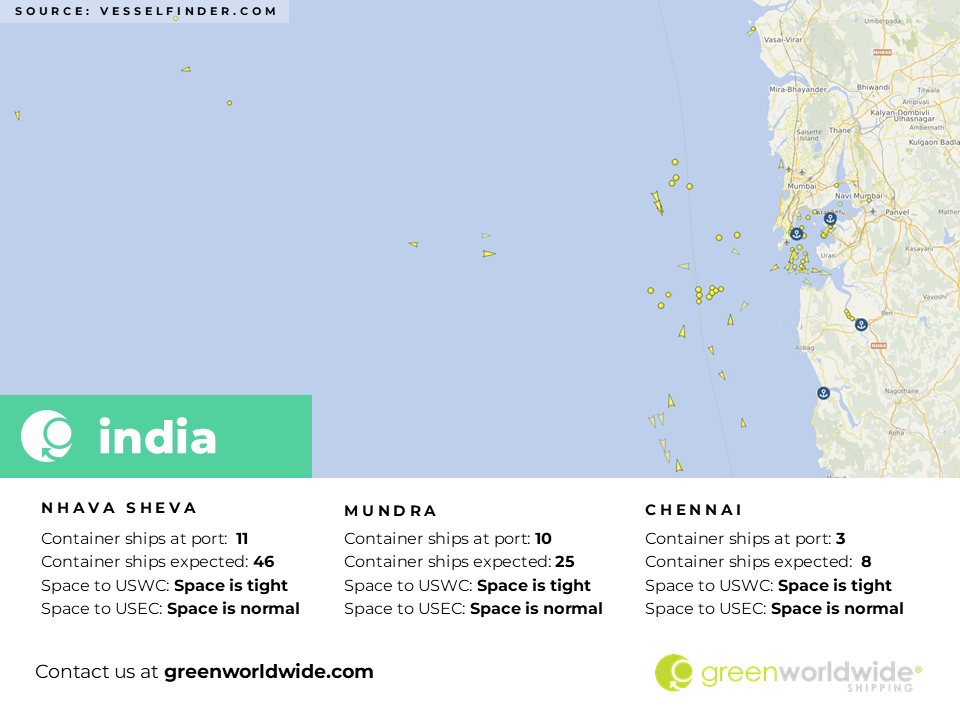
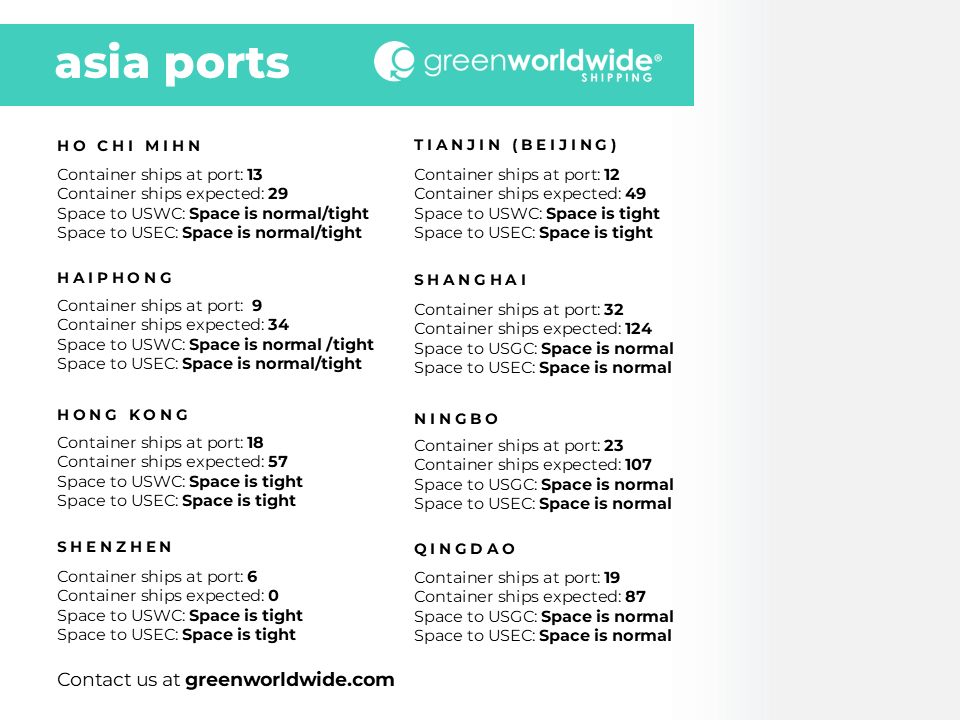
Stay up-to-date on freight news with Green’s Weekly Freight Market Update by following us on LinkedIn. For continuous updates, make sure to check out our website at greenworldwide.com.