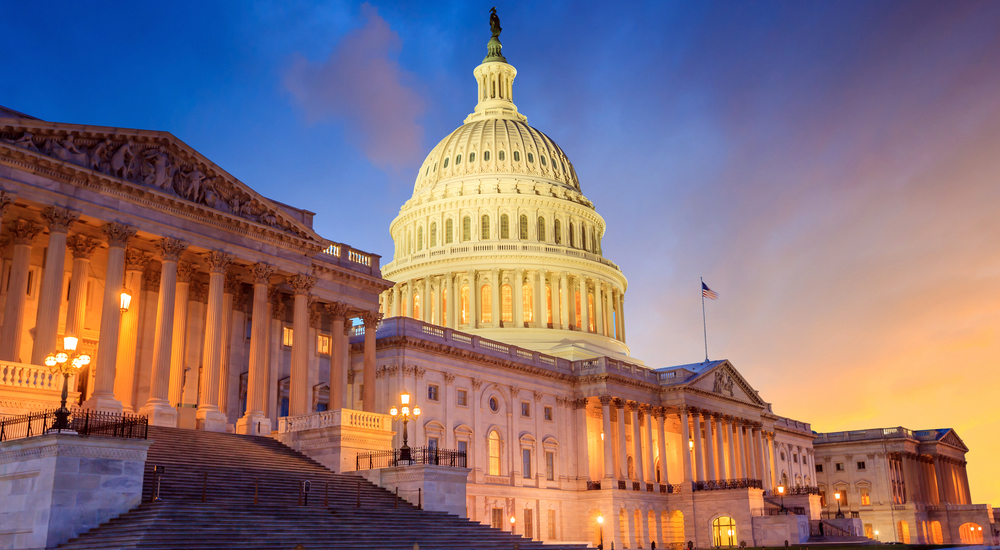
On Tuesday, December 14, 2021, the United States Senate and House of Representatives finalized a bipartisan bill that would restrict imported goods made with forced labor from China’s Xinjiang region. The same evening, the House unanimously voted to pass the updated legislation.
Under the new Uyghur Forced Labor bill…
- goods from the Xinjiang region of China;
- goods with inputs from the region;
- factories that employ Uyghur and other minority workers under the government’s ‘‘poverty alleviation’’ and ‘‘pairing assistance’’ labor programs…
…will be assumed to be made with forced labor.
TIMELINE ONCE ENACTED
30 days – Forced Labor Enforcement Tax Force begins request for public comments.
45 days – Public comment period.
TBD – Public Hearing to determine…
- How to improve goods’ origin tracing,
- How to improve supply chain transparency, and
- How to prevent alternative supply chain routes for goods mined, produced, or manufactured wholly or in part with Chinese forced labor.
An enforcement strategy will then be developed to…
- Prevent importation of violating goods,
- List companies that use forced labor programs, and
- CBP guidance for importers on “due diligence, effective supply chain tracing and supply management measures,” including the “type, nature and extent of evidence” for presumption rebuttal.
Once the new version passes again in the Senate, the U.S. President will have to sign it into law. The White House released a statement of President Biden’s support for the compromise legislation.
“The President welcomes the agreement by Congress on the bipartisan Uyghur Forced Labor Prevention Act. We agree with Congress that action can and must be taken to hold the People’s Republic of China accountable for genocide and human rights abuses and to address forced labor in Xinjiang.
That is why the Administration has already taken concrete measures including imposing visa restrictions, Global Magnitsky Act and other financial sanctions, export controls, import restrictions, and the release of a business advisory. The President also rallied the G7 to commit to ensure all global supply chains are free from the use of forced labor—including from Xinjiang.
The Administration will work closely with Congress to implement this bill to ensure global supply chains are free of forced labor, while simultaneously working to on-shore and third-shore key supply chains, including semiconductors and clean energy.”
White House Statement, U.S. Press Secretary, Jen Psaki
READ THE FULL: Uyghur Forced Labor Bill
Stay up-to-date on freight news with Green’s Weekly Freight Market report by following us on Facebook, Twitter, and LinkedIn. For continuous updates, make sure to check out our website at greenworldwide.com.