Early March finds global logistics networks adjusting to post Lunar New Year production recovery while vessel deployments and regional disruptions influence capacity allocation across several trades. Asia origin gateways are transitioning from holiday slowdowns toward normal production cycles, with execution conditions varying by port and service. Vessel repositioning tied to operational developments affecting Middle East routing patterns is beginning to influence broader fleet allocation decisions across global shipping networks, while recent weather disruptions in parts of Europe have contributed to localized schedule adjustments. Air cargo markets are entering a gradual recovery phase as cargo volumes rebuild following the holiday period.
TRANS-PACIFIC OCEAN CAPACITY & ASIA-ORIGIN OPERATIONS
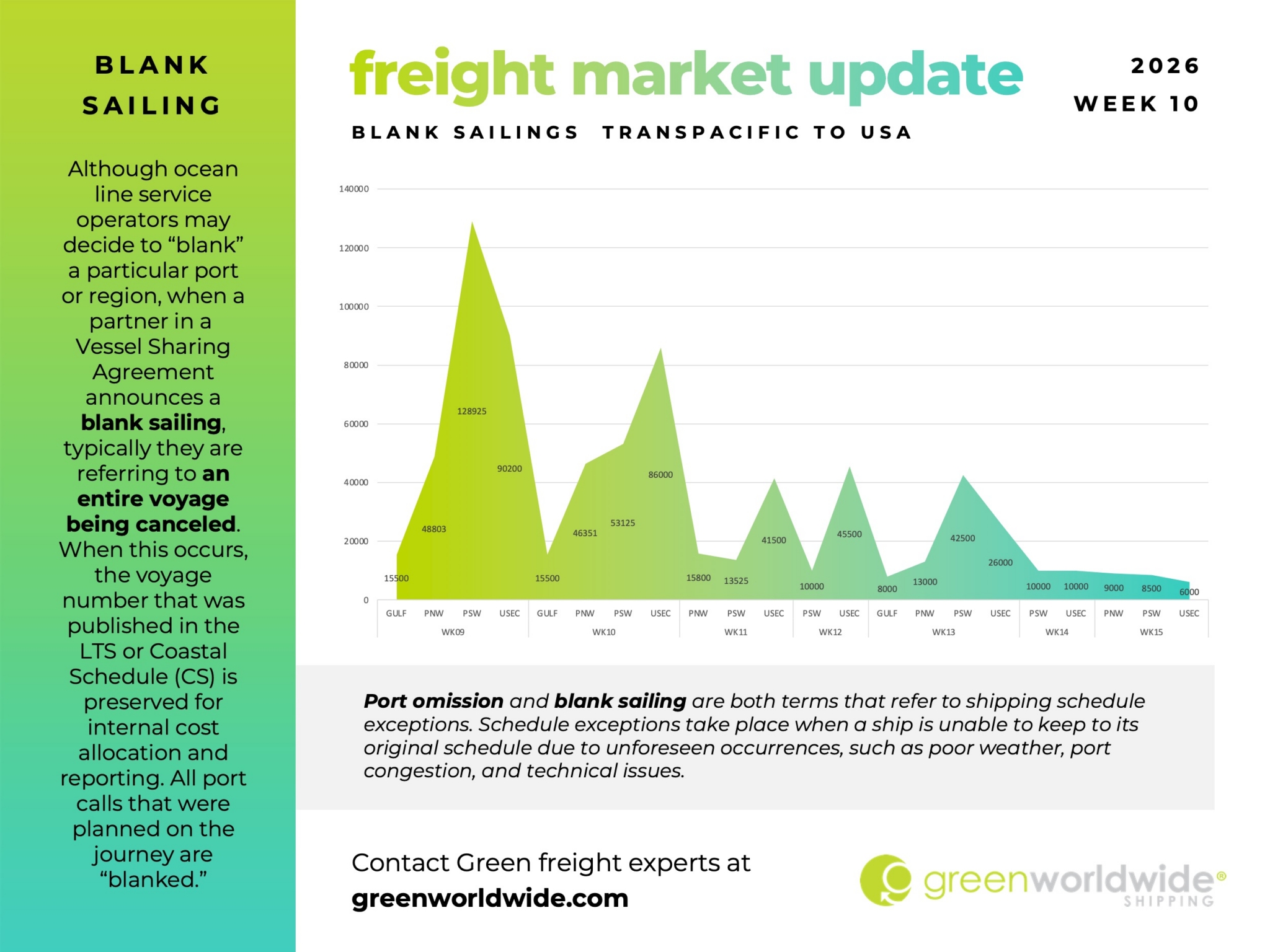
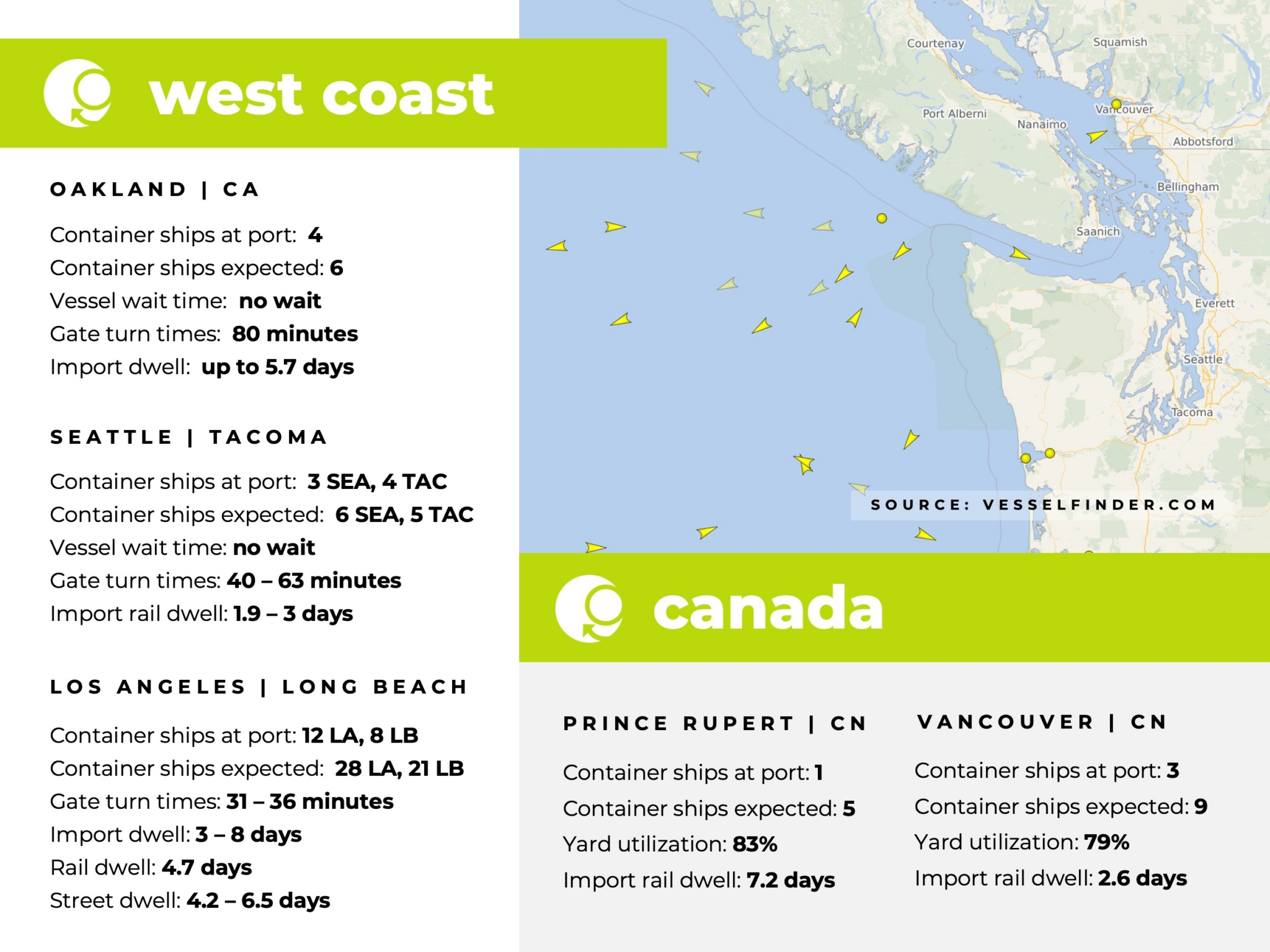
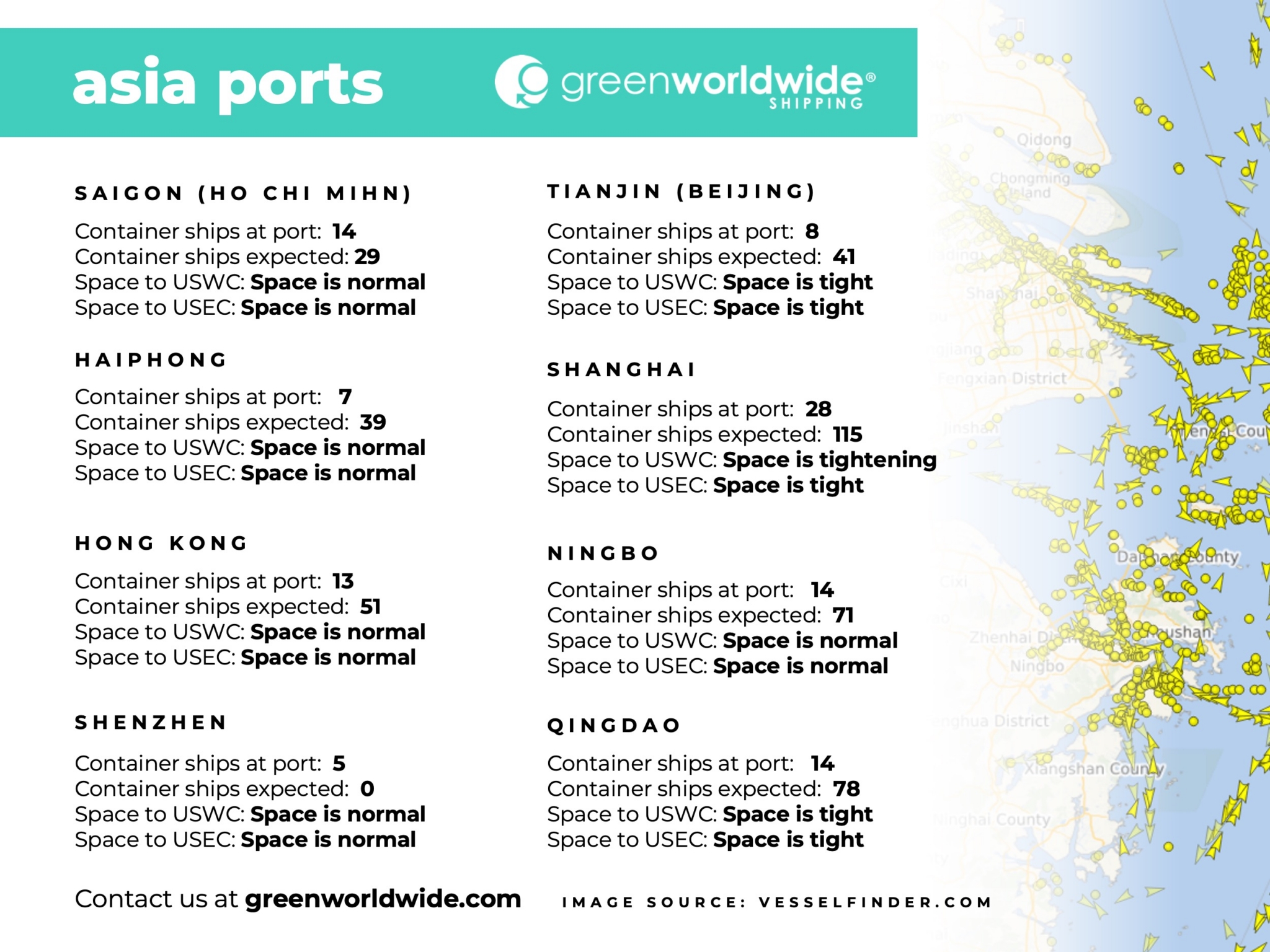
Trans-Pacific vessel space remains generally available across most Asia origin gateways as carrier rotations normalize following Lunar New Year blank sailings. East China ports including Shanghai and Ningbo are operating under stable conditions with balanced vessel availability into both U.S. coasts. North China gateways such as Qingdao and Tianjin are reflecting tighter execution into the U.S. East Coast due to rotation timing and longer sailing loops. South China ports including Shenzhen and Hong Kong remain comparatively balanced, while Vietnam-origin cargo from Ho Chi Minh City and Haiphong continues operating under normal conditions. Overall port operations across the region remain stable with terminal performance varying primarily by service rotation rather than broad congestion.
EUROPE WEATHER DELAYS
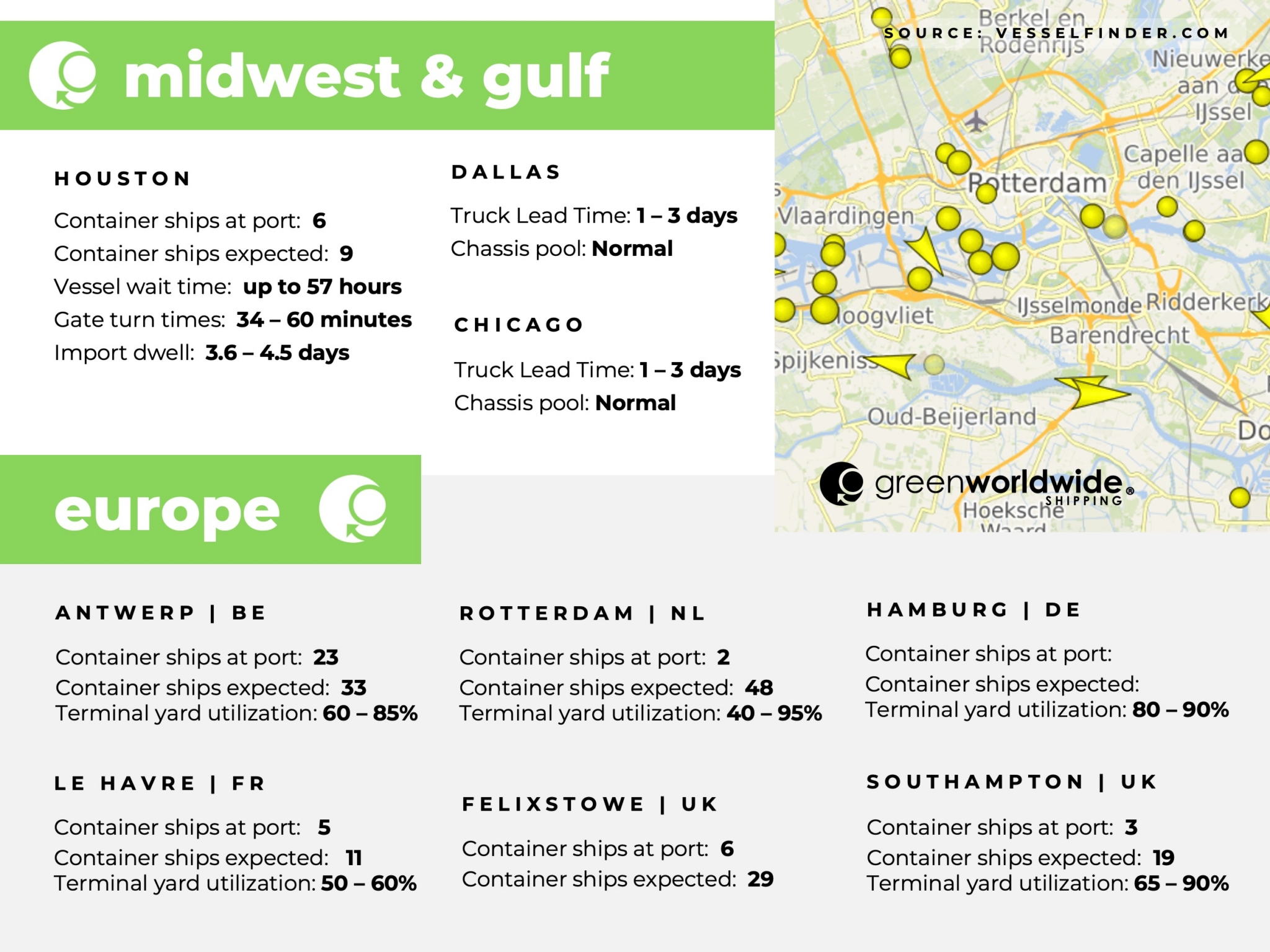
Recent severe winter weather across the Bay of Biscay disrupted vessel movements across Western Mediterranean and North Europe shipping networks, contributing to schedule delays on multiple services. Ports including Algeciras and Barcelona experienced temporary operational stoppages due to strong winds, while terminals in Northern Europe continue managing delayed vessel arrivals. Gateways such as Rotterdam, Antwerp, and Hamburg are reporting elevated yard utilization as vessels arrive off schedule following earlier weather disruptions. Although weather conditions have improved, some voyages may still require temporary shelter due to ongoing seasonal conditions in the Bay of Biscay. Terminals continue working through adjusted vessel lineups and schedule deviations as operations gradually stabilize.
Weather conditions also affected parts of the European aviation network earlier in the week. Strong winds and storm activity contributed to flight delays and temporary ground handling slowdowns at several major cargo gateways across Western Europe. Airports including Paris Charles de Gaulle, Amsterdam Schiphol, and Frankfurt reported operational delays as arrival flow management measures were implemented during the peak of the storm system. While weather conditions have since improved, some cargo handling operations continue working through minor scheduling adjustments. Air cargo networks across Europe are gradually returning to normal operating patterns as weather conditions stabilize.
INDIA-ORIGIN PORT OPERATIONS
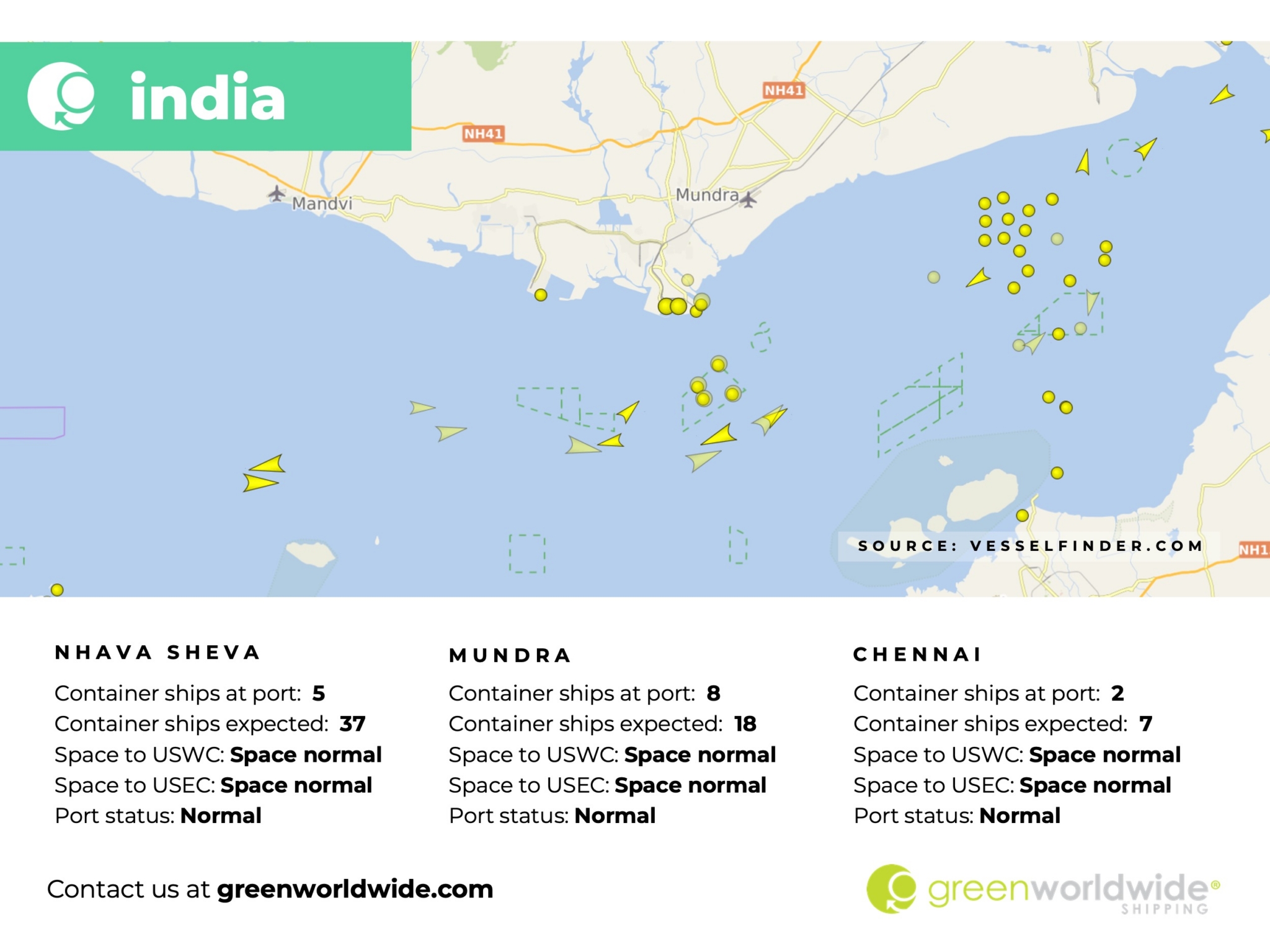
India export gateways are operating under generally stable conditions, though execution remains influenced by transshipment alignment through regional hubs. Nhava Sheva and Mundra continue to reflect normal port operations with vessel space available into both U.S. coasts. Chennai remains comparatively balanced while remaining exposed to schedule variability tied to downstream hub performance. West Coast routings remain broadly available while East Coast execution varies depending on service rotation timing. Industry analysts note that India-origin cargo remains closely linked to transshipment hub performance across the Middle East and Southeast Asia.
AIR CARGO STATUS
Asia-U.S. air cargo markets are transitioning from the Lunar New Year slowdown toward early spring production recovery. Cargo volumes are increasing from holiday levels but have not yet returned to full seasonal norms. Passenger belly capacity continues to normalize while freighter deployment remains aligned with current cargo demand patterns. Airspace restrictions affecting parts of the Middle East are contributing to routing adjustments across certain long-haul cargo networks. Southeast Asia export demand remains supported by electronics, high-technology cargo, and e-commerce shipments.
U.S. TRADE POLICY DEVELOPMENTS
Recent court activity continues to shape the regulatory landscape surrounding tariffs previously imposed under the International Emergency Economic Powers Act. Earlier appellate filings addressed the procedural timeline for implementing court rulings tied to the IEEPA tariff litigation. On March 4, the U.S. Court of International Trade issued an order directing U.S. Customs and Border Protection to liquidate all unliquidated entries that were subject to those duties and to re-liquidate entries that have not reached final liquidation without applying the IEEPA tariffs. The order follows the Supreme Court’s determination that IEEPA does not provide tariff authority. The court also indicated that a single judge will oversee matters related to refund administration associated with the duties, and additional procedural developments related to refund implementation are expected as the litigation continues.
Stay up-to-date on freight news with Green’s Weekly Freight Market Update by following us on LinkedIn. For continuous updates, make sure to check out our website at greenworldwide.com.