

U.S. container imports reached a September record as the extended peak shipping season begins to wind down. New figures show that cargo activity remained strong through the end of the third quarter, particularly at West Coast gateways, even as forecasts point to lower volumes heading into November and December.
Ocean freight rates continue to face downward pressure as carriers restore capacity following China's Golden Week holiday. Meanwhile, new attacks on commercial vessels in the Black Sea, stronger global air cargo demand and proposed changes to U.S. customs entry requirements are creating additional considerations for international shippers.
MARKET SUMMARY OVERVIEW
Drewry's World Container Index fell 2% for the week ending October 8.
On the Trans-Pacific, Shanghai–Los Angeles declined 3%, while Shanghai–New York fell 2%. Asia–Europe pricing also softened, with Shanghai–Rotterdam down 2% and Shanghai–Genoa unchanged.
Intra-Asia rates reversed their recent upward trend, declining 1% after six consecutive weeks of record highs.
The latest movements reflect changing capacity and demand conditions following Golden Week. Drewry expects rates to remain relatively stable in the near term, although additional vessel capacity and the gradual return of selected services through the Suez Canal could continue to influence pricing.
U.S. IMPORT VOLUMES SET SEPTEMBER RECORD AS PEAK SEASON WINDS DOWN
U.S. containerized imports reached 2,546,261 TEUs in September, the highest September volume on record, according to Descartes' October Global Shipping Report.
Volumes increased 10.3% compared with September 2025, although they declined 2.2% from August. Through the first nine months of 2026, total imports were 0.8% above the same period last year.
China origin shipments reached 924,454 TEUs, up 21.2% year-over-year and 4.5% from August. China's share of U.S. container imports increased to 36.3%, compared with 34.0% in August.
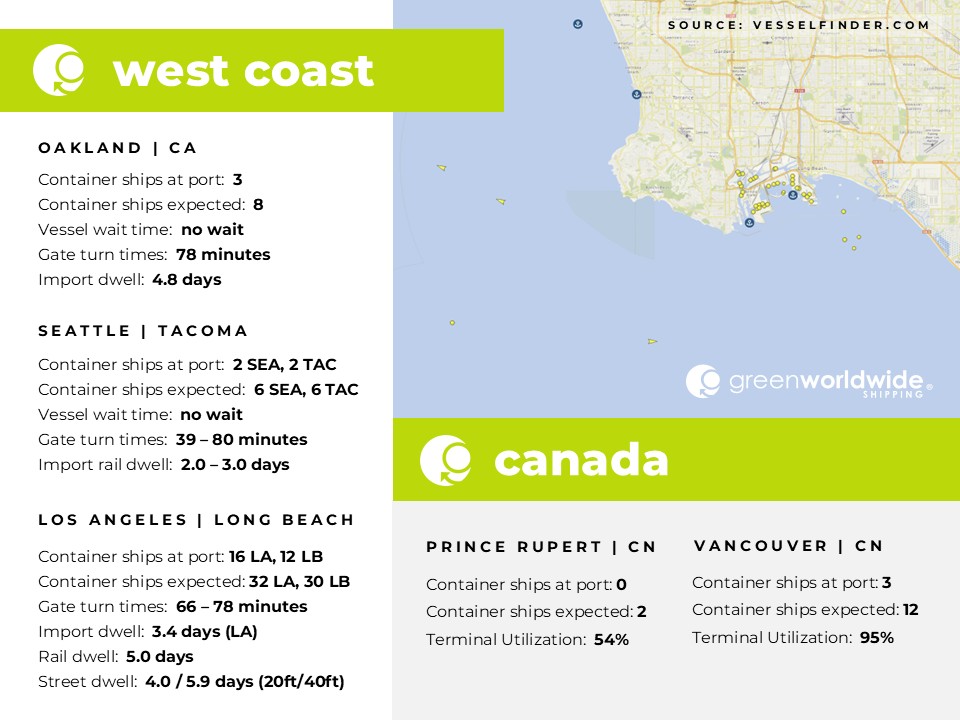
The Port of Los Angeles also recorded its busiest month on record, handling approximately 1.04 million TEUs in September. Strong West Coast activity contrasted with monthly declines at several East and Gulf Coast gateways.
The latest National Retail Federation Global Port Tracker indicates that the extended peak season is now approaching its conclusion.
October imports are forecast at 2.25 million TEUs, followed by 2.0 million in November and 2.02 million in December. Full year 2026 imports are projected to reach 25.8 million TEUs, up 1.4% compared with 2025.
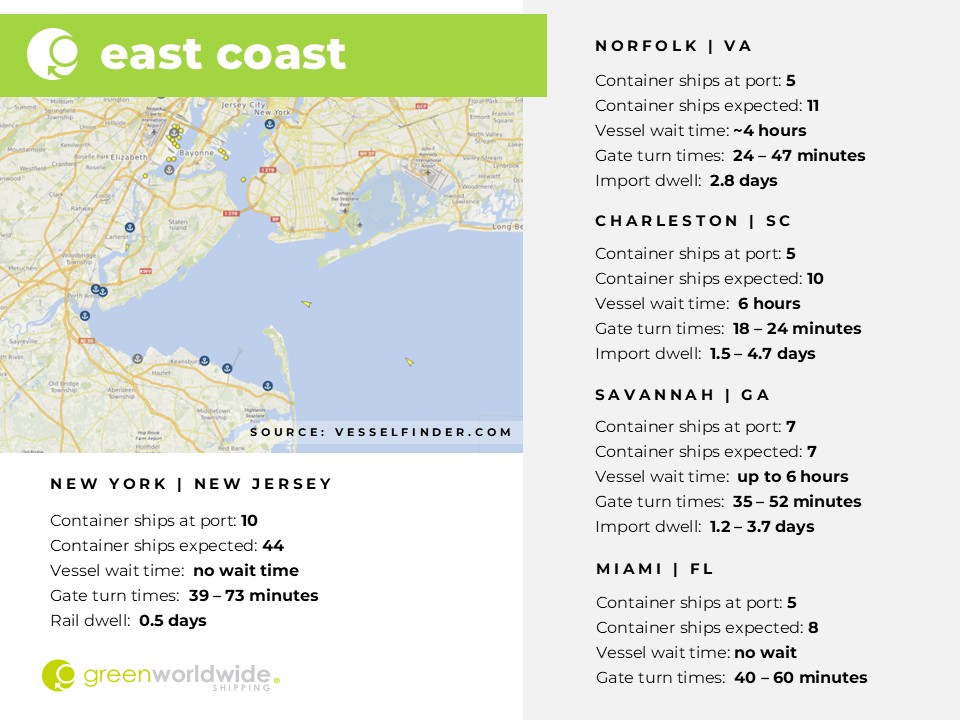
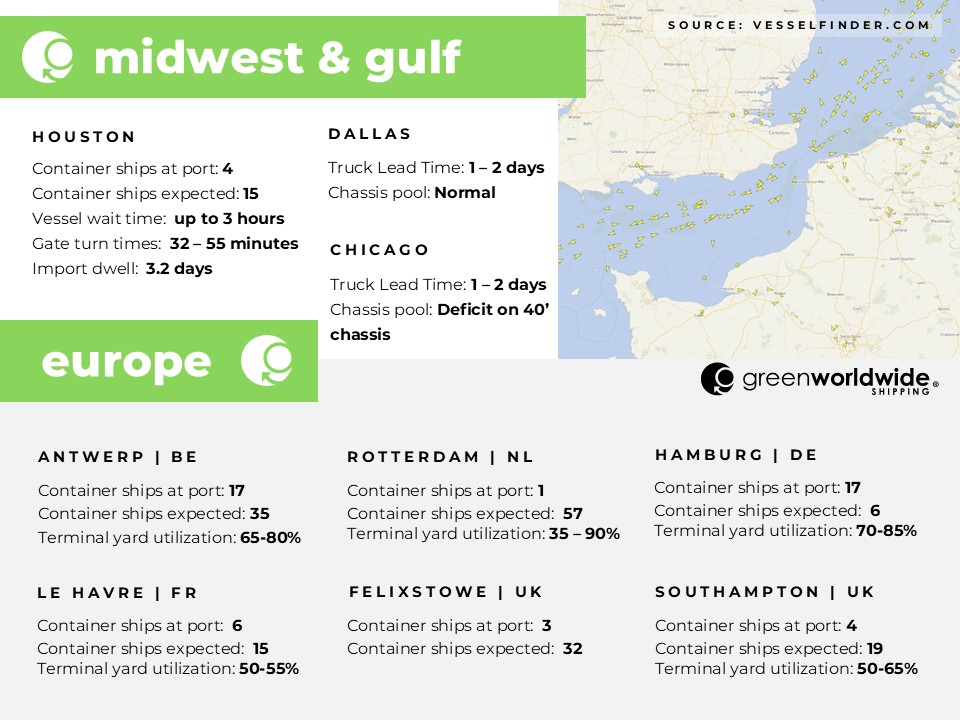
The figures point to moderating import activity following an unusually prolonged peak season. However, Descartes reported increased transit delays at eight of the ten leading U.S. ports, indicating that elevated volumes continue to affect cargo movement at individual gateways.
Importers should continue monitoring port performance and inland transportation availability as cargo distribution patterns and seasonal demand change.
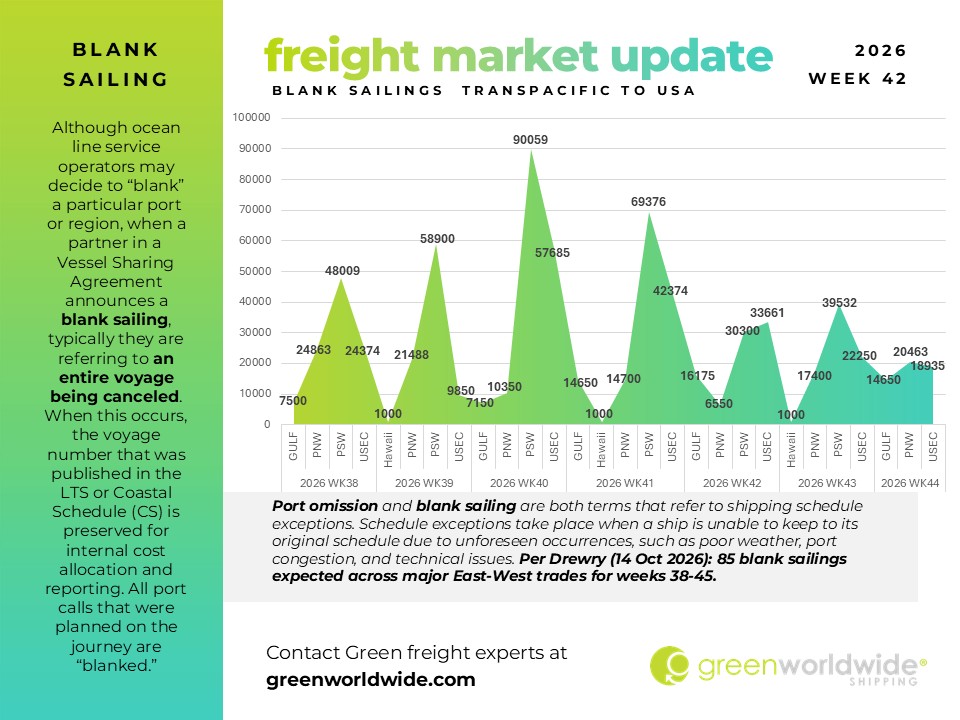
BLANK SAILINGS FALL AS CARRIERS RESTORE CAPACITY
Scheduled ocean capacity is increasing across the major East–West trades as carriers move beyond China's October 1–7 Golden Week holiday.
Drewry's October 9 Cancelled Sailings Tracker lists 34 blank sailings from Weeks 42 through 46 out of 713 scheduled voyages, representing a cancellation rate of approximately 5%.
That compares with 39 blank sailings out of 710 scheduled voyages in the previous assessment.
Asia–North Europe and Mediterranean services account for approximately 50% of the announced cancellations, followed by the Trans-Pacific eastbound trade at 32% and the Transatlantic at 18%.
The reduction in cancellations comes as Asia–Europe rates continue to decline and selected services return to shorter Suez Canal routings. These routing changes increase effective vessel capacity by reducing voyage distances and the time required to complete round trips.
For shippers, additional scheduled capacity may provide more sailing options, but schedule reliability remains dependent on port operations, network adjustments and individual routing decisions.
Importers should confirm current vessel schedules and transit times, particularly where services are transitioning between Cape of Good Hope and Suez Canal routings.
NEW BLACK SEA ATTACKS RAISE RISKS FOR COMMERCIAL SHIPPING
Commercial shipping in the western Black Sea faces heightened security concerns following additional drone attacks on cargo vessels near Bulgaria.
On October 13, two commercial ships were struck off Bulgaria's northeastern coast. The Guinea-Bissau-flagged cargo vessel HS Dignity sank, with eleven crew members initially reported missing.
The Malta-flagged Chelsea 3 was also damaged. All fifteen crew members were rescued, although several required medical attention.
The incidents follow a separate attack on commercial vessels in the same region on October 6, raising concerns about the safety of shipping routes serving Black Sea ports.
Bulgarian authorities have not conclusively established responsibility for the latest attacks.
The developments may affect vessel routing decisions, marine insurance requirements and carrier willingness to operate in exposed areas.
Shippers moving cargo through the Black Sea should confirm current service availability and review contingency arrangements as security conditions develop.
GLOBAL AIR CARGO DEMAND RISES 9% IN SEPTEMBER
Worldwide air cargo volumes increased 9% year-over-year in September and 3% compared with August, according to WorldACD's October 12 report.
Asia-Pacific and North American origins each recorded 10% year-over-year growth, followed by Middle East and South Asia at 9%, Europe and Africa at 8%, and Central and South America at 5%.
The increase reflects continued demand for time sensitive and high value cargo, including technology related shipments.
Performance varied across major trade lanes. China-to-U.S. air cargo volumes increased 17% year-over-year, while China-to-Europe volumes declined 10%.
Pricing remained elevated despite a temporary reduction in cargo activity during Golden Week.
In Week 40, worldwide chargeable weight declined 2% week-over-week, while average spot rates increased 1%. Spot rates remained 32% above the same period last year, with full market average rates 26% higher.
Global air cargo capacity was approximately 4% above year-earlier levels, although available capacity on some Middle East routes remained constrained.
Shippers with time sensitive cargo should continue reviewing lane specific rates and space availability as fourth quarter demand develops.
CBP PROPOSES NEW ELECTRONIC ENTRY REQUIREMENTS FOR LOW VALUE SHIPMENTS
U.S. Customs and Border Protection published a proposed rule on October 8 that would change entry requirements for merchandise valued at $2,500 or less.
The proposal would require electronic filing for informal entries, introduce additional shipment data requirements and establish a new electronic process for qualifying international mail shipments.
Under the proposed changes, Entry Type 11 filings would generally need to be submitted electronically on or before the date of importation. Filers would also be required to identify the final delivery party when different from the ultimate consignee.
A new Entry Type 13 would be established for eligible international mail shipments, including additional sender and package tracking information.
The proposed rule would also introduce bonding requirements for affected informal entries and expand circumstances under which CBP could require formal entry for lower value shipments.
The changes are intended to strengthen customs oversight following changes to U.S. de minimis treatment.
The rule has not been finalized. CBP is accepting public comments through December 7, 2026.
Importers, customs brokers and transportation providers handling low value shipments should review the proposal and assess potential changes to filing procedures, documentation requirements and customs bonds.
Stay up-to-date on freight news with Green’s Weekly Freight Market Update by following us on LinkedIn. For continuous updates, make sure to check out our website at greenworldwide.com.